Mold in Air Ducts: Causes, Conditions, and Realistic Remediation
Mold needs moisture and a food source. Eliminating the moisture — not just fogging a fungicide — is what keeps it from returning.
By AirDuctSanitizingServices.com Editorial Team · 7 min read · June 12, 2026
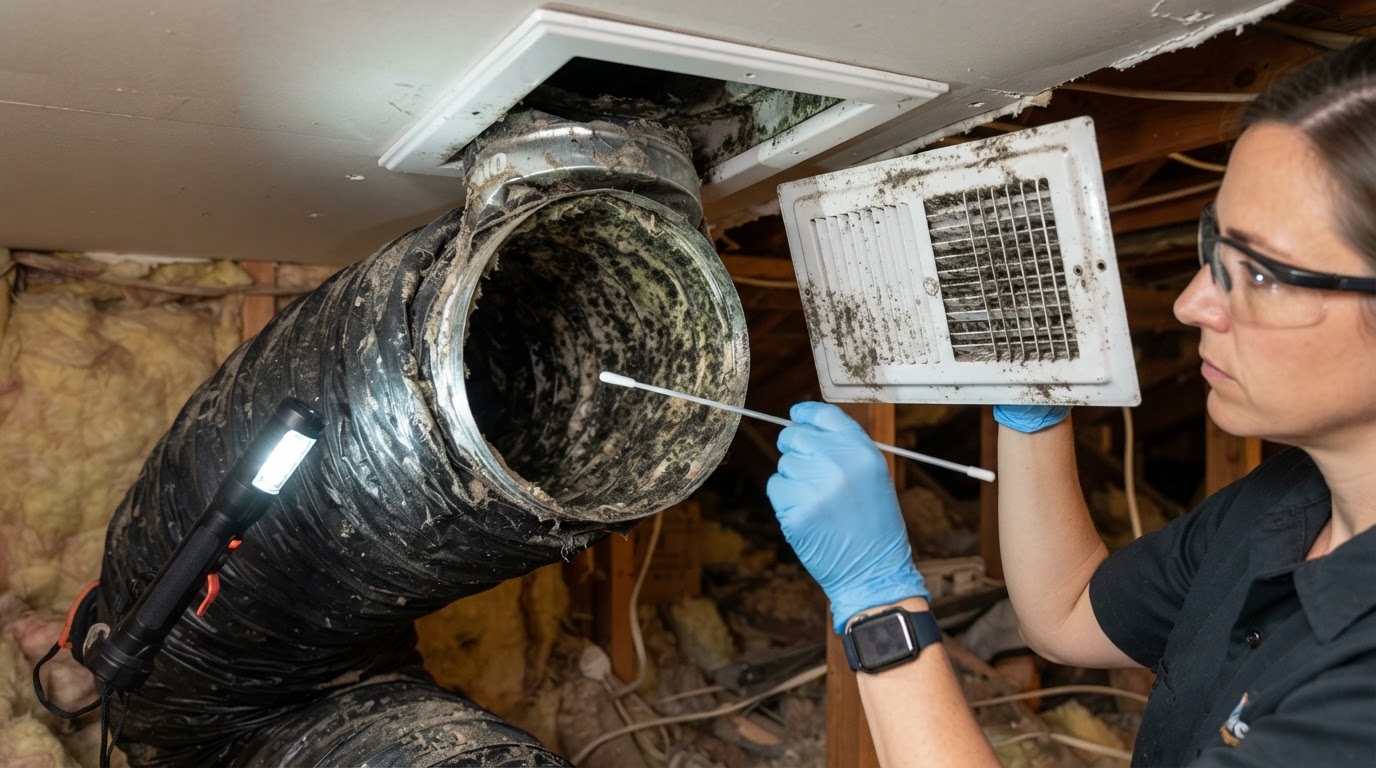
Mold in ductwork is almost always a moisture problem wearing a duct problem's clothes. The conditions that allow growth — a wet coil, a drain pan overflow, condensation on a cold duct running through a warm humid attic, or a humidifier malfunction — have to be corrected or the mold returns after any treatment.
Realistic remediation removes the visible growth physically (HEPA-vacuum, brush, and where present replace contaminated flex duct or internal liner), dries the system, and then applies an EPA-registered fungicidal sanitizer to the cleaned interior. Fogging a fungicide over living growth, without removing it, kills the surface but leaves the spores and the food source in place.
Hard-surface sheet metal duct can be cleaned and sanitized. Internally-lined fiberglass duct, flex duct, and duct board that show actual growth usually need replacement; porous insulation cannot be reliably remediated once colonized.
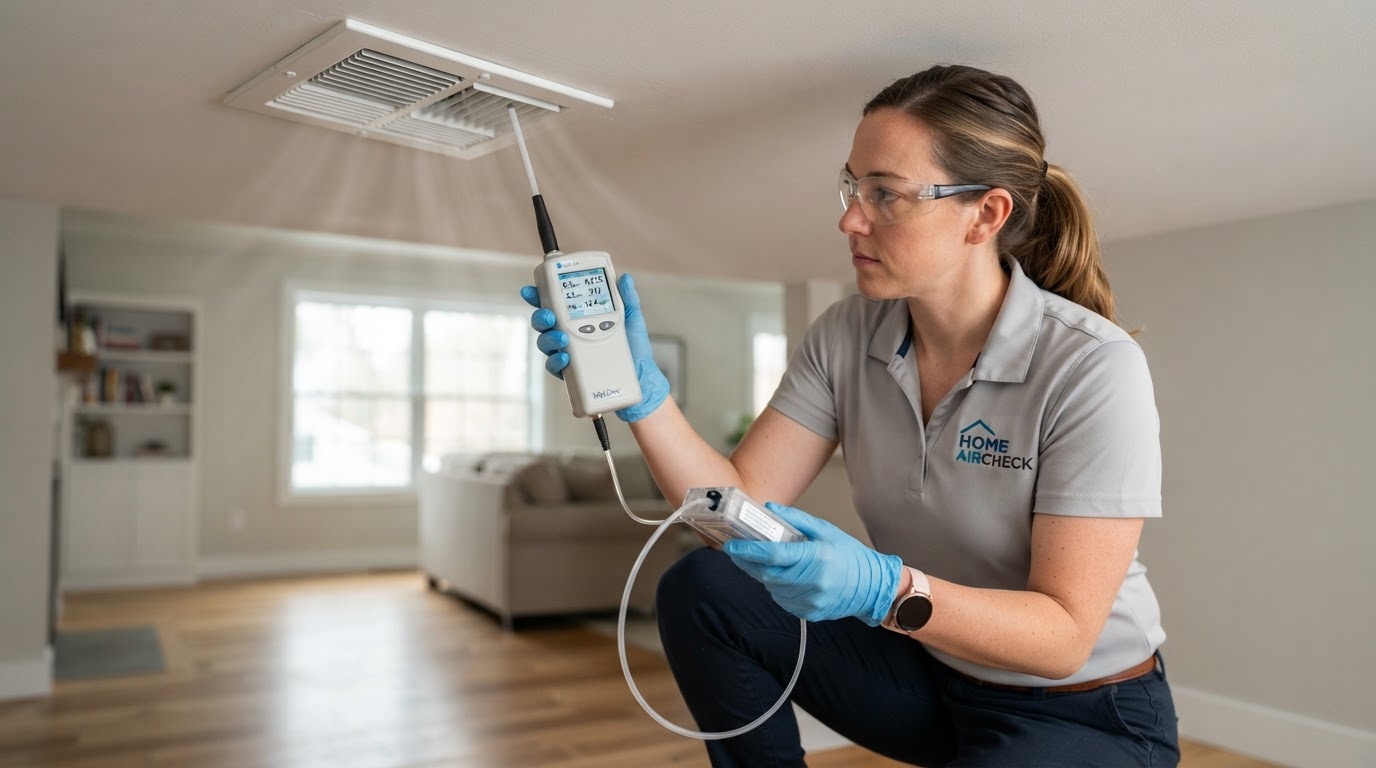
After remediation, fix the moisture source: re-insulate or seal sweat-prone runs, clear the condensate drain, repair or remove a malfunctioning humidifier, and address the building envelope if humidity is high. A post-remediation spore test that returns to the indoor/outdoor baseline confirms the job is done. A provider who skips the moisture diagnosis is selling a repeat customer.