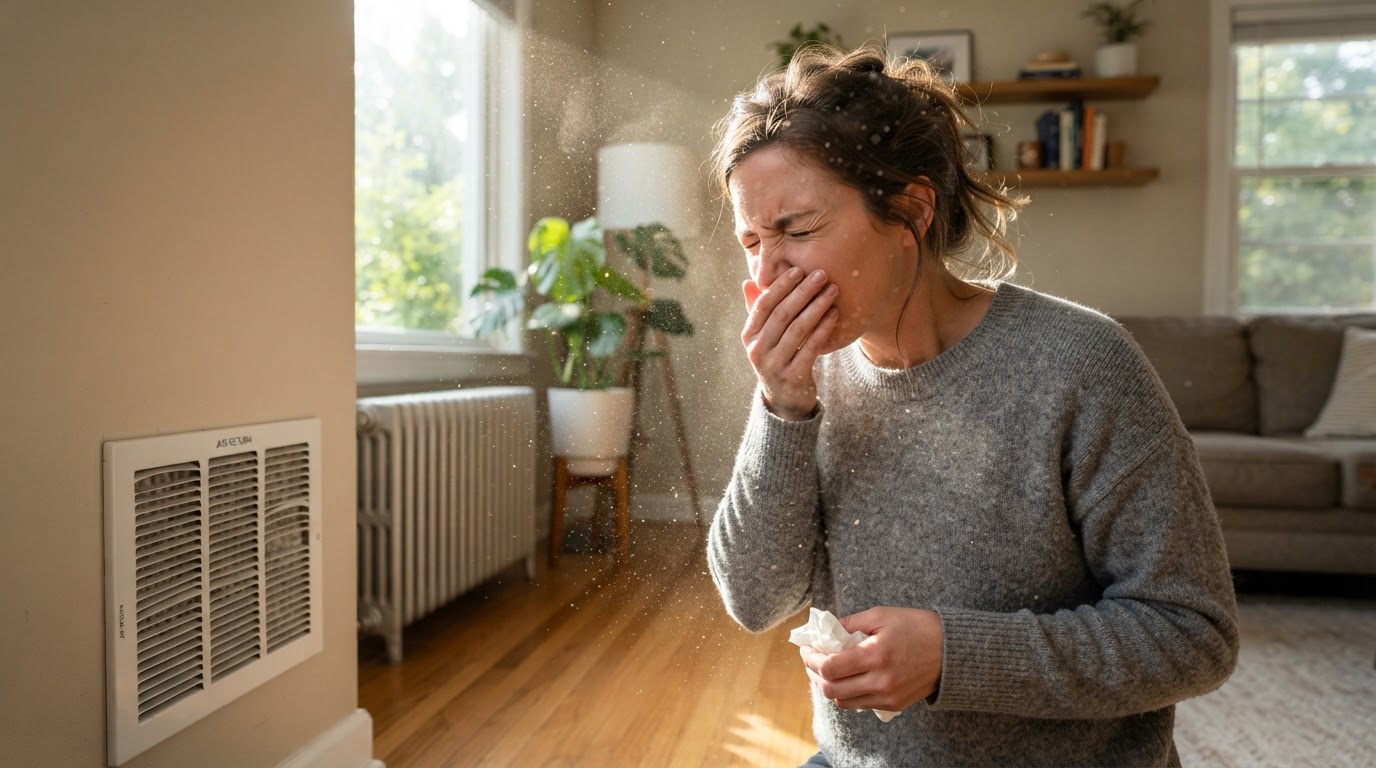
HVAC Duct Cleaning for Allergy and Asthma Sufferers
For allergy households, HVAC duct cleaning has real value only when the ductwork is actually contributing the allergens. Confirm the source before booking the cleaning.
By AirDuctSanitizingServices.com Editorial Team · 8 min read · February 13, 2026
For households managing seasonal allergies or asthma, the HVAC system is both a source of relief and a potential source of irritation, and hvac duct cleaning is one tool for reducing what the system circulates. The value of that tool depends on whether the ductwork is actually contributing the allergens a resident is reacting to — which is a question worth answering before paying for a cleaning.
The mechanism is simple. Whatever is inside the ductwork — settled dust, mold spores, pet dander, pollen drawn in through a leaky return, or debris from a past construction — gets re-aerosolized each time the fan runs and is delivered to every room the supply reaches. For a sensitive occupant, that reservoir becomes a continuous low-level exposure. HVAC duct cleaning removes the reservoir and gives the system a clean baseline, which is the part of the strategy that actually changes what the air carries.
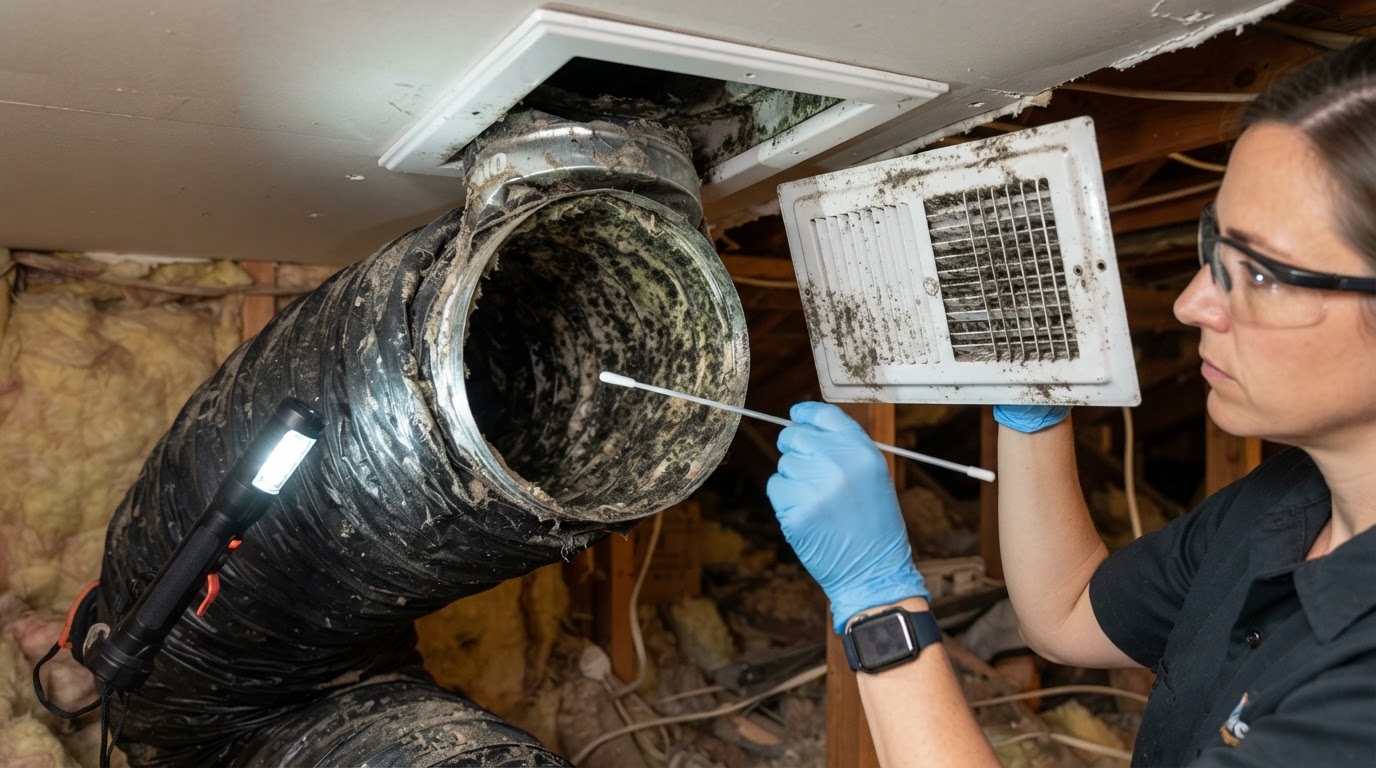
The honest caveat is that not all allergy symptoms are duct-caused. Pollen entering through open windows, dust mites in bedding and upholstery, pet dander on surfaces, and outdoor mold are all common triggers that have nothing to do with the ducts. Cleaning ducts that hold only inert, settled dust will not relieve a reaction driven by a different source. The clearest case for hvac duct cleaning is a symptom that correlates with the system running — a stuffy or itchy response that appears when the furnace or AC cycles on — combined with evidence of a contaminant inside the ducts.
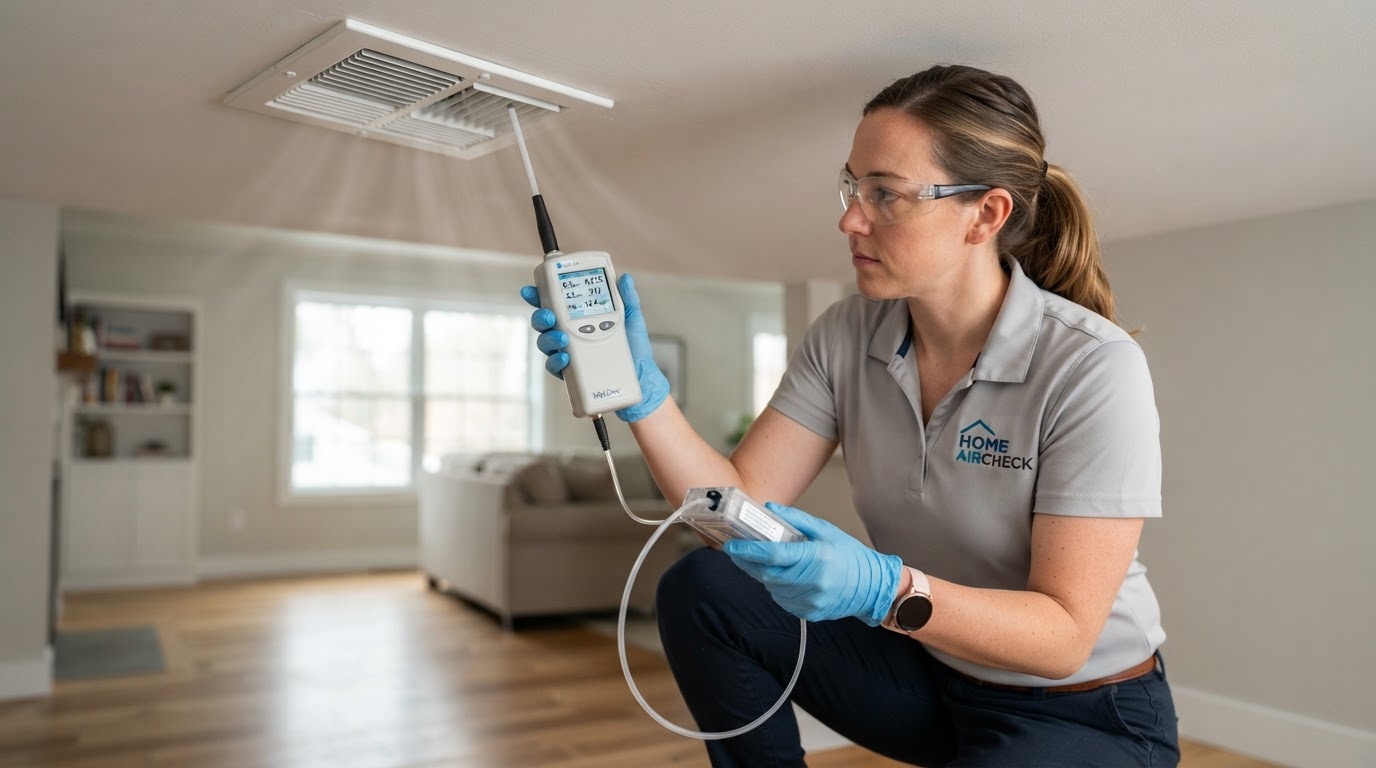
Confirming that evidence matters. A camera scope of the supply trunk and the first branches, a look at the coil and drain pan, and ideally a comparison of indoor and outdoor spore counts through an accredited lab tell you whether the ducts are the source. Sampling without scoping is guessing; the combination of visible contamination and an elevated indoor-to-outdoor spore ratio is what justifies the cleaning rather than a suspicion alone.
When the cleaning is warranted, the method determines the result. Source removal — a HEPA-filtered negative-air machine on the trunk with mechanical agitation of each branch — physically extracts the allergen reservoir rather than stirring it. A fog-only "sanitizing" pass applied over un-removed dust does not reach the duct surface and can itself irritate a sensitive occupant. For an allergy household, the sanitizing pass, if used at all, should be an EPA-registered product applied after source removal, with its re-entry window respected.
The surrounding system is where the allergy strategy actually pays off. A filter at the right MERV rating for the blower — high enough to capture the particles that matter, not so high that it starves the coil — catches the allergens before they reach the ducts. A sealed return duct keeps from drawing unfiltered attic or crawlspace air into the system. A UV-C lamp at the coil suppresses biological growth on the wettest surface. HVAC duct cleaning paired with those upstream fixes keeps the reservoir from returning; the cleaning alone, on a leaky or under-filtered system, refills within a season.
The practical path: scope the ducts and the air handler first, confirm a real contaminant, clean by source removal, sanitize only if justified, and fix the filter and duct-sealing conditions that caused the buildup. For an allergy or asthma household, hvac duct cleaning is one component of a wider indoor-air strategy, and it earns its place when the ducts are genuinely part of the exposure. Done that way, the result is measurable in fewer symptom flare-ups tied to the system; done as a precaution, it is a cleaner duct with a less certain benefit.