How to Vet Air Duct Cleaning Companies
A short set of consistent questions on method, credentials, and written scope does most of the work of telling a thorough provider from a marginal one.
By AirDuctSanitizingServices.com Editorial Team · 8 min read · February 6, 2026
The number of air duct cleaning companies in any given market is large, and the difference between a thorough provider and a marginal one is not visible in an advertisement. Vetting is the process of confirming that a company can actually deliver a complete source-removal cleaning — with the right equipment, credentials, and scope — before you let a crew into your HVAC system. A short, consistent set of questions does most of the work.
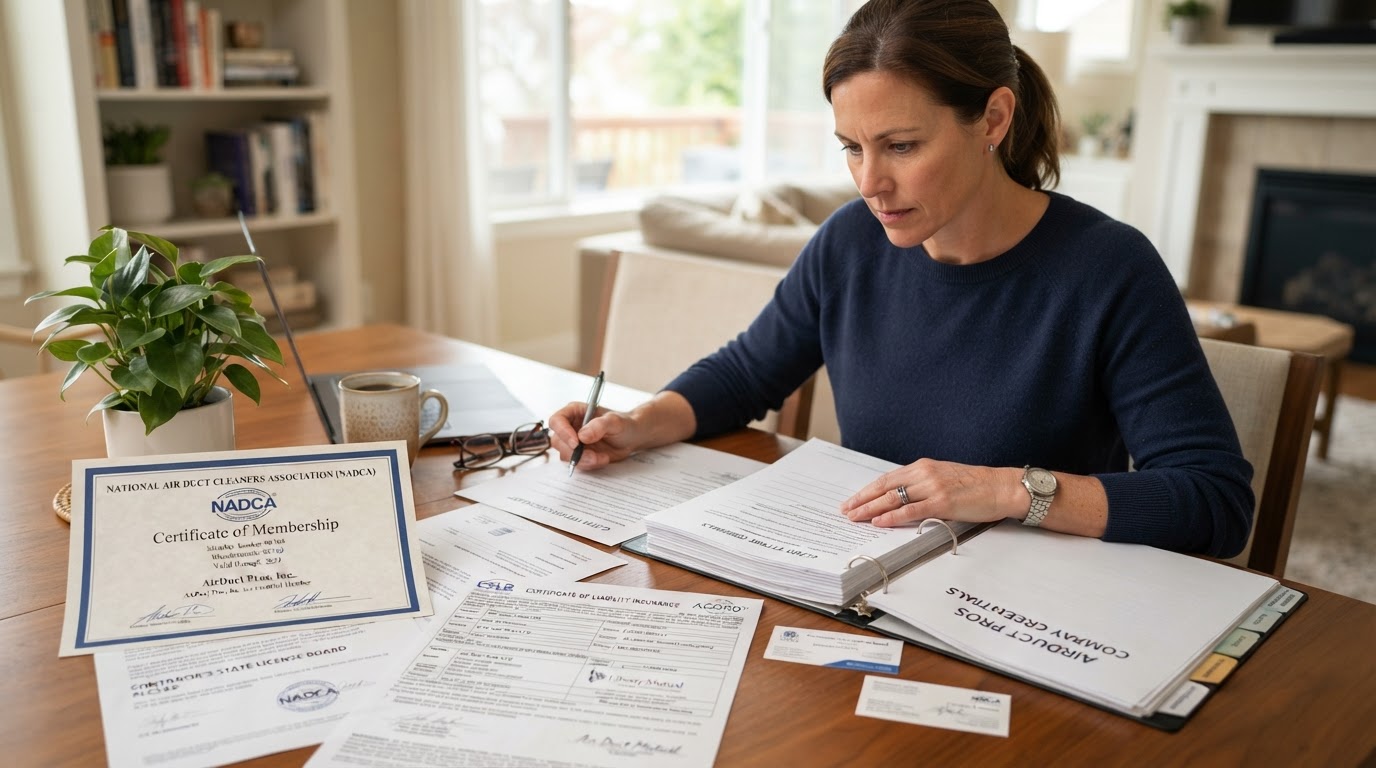
Start with credentials. NADCA (National Air Duct Cleaners Association) certification requires training on the assessment, cleaning, and restoration of HVAC systems, and both company membership and individual technician certifications are verifiable in the association's directory. General liability insurance and any required state or local HVAC licensing matter because the crew works around your furnace, electrical, and ductwork. Among air duct cleaning companies, the ones that can name their certifications and provide proof are the ones worth shortlisting.
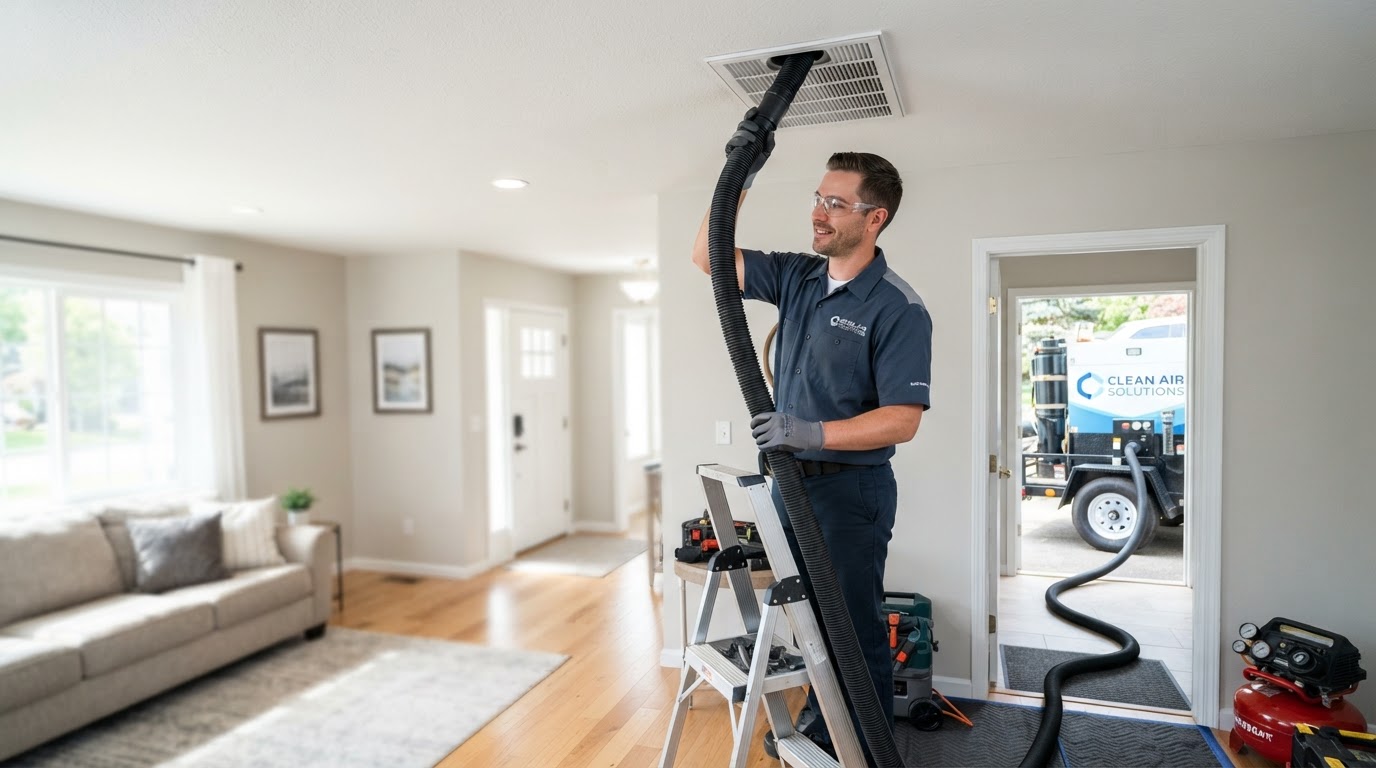
Ask about the method in specific terms. A complete cleaning uses a HEPA-filtered negative-air machine connected to the trunk line, with each branch agitated by rotary brushes, air whips, or skipper balls and the loosened debris extracted rather than pushed deeper. A company that describes its method as "we vacuum each vent" or "we blow air down the lines" is describing a limited cleaning, not a source-removal job. The equipment a company brings to your home — the size of the negative-air machine, the agitation tools, the access approach — is the clearest signal of what you are paying for.
Examine the scope. Ask for a written, line-item quote that lists every supply and return register, the main trunk lines, the air handler or furnace plenum, and the evaporator coil if it is accessible. The components that get excluded in a low quote — the trunk, the coil, the air handler — are the components where the heaviest debris settles. Reputable air duct cleaning companies put the scope in writing; the ones that quote a flat number without listing the work usually deliver a fraction of it.
Test the pricing pattern. A low per-vent price that climbs with a list of upsells, a coupon that excludes the trunk and coil, or a quote that cannot be put in writing are all signs of a service structured around the add-on rather than the cleaning. A fixed whole-home quote with a written scope and a clear method is the structure that tends to deliver what it promises. The pricing behavior tells you how the company makes its money, which is often more revealing than the number itself.
Check references honestly. Independent review platforms are useful for patterns — repeated complaints about upsells, no-shows, or incomplete work — but a high count alone does not confirm a complete method. Cross-reference with the NADCA directory and the company's own website, which should describe its equipment and process plainly. Ask whether the company provides before-and-after documentation — scope video or photos of the debris removed — because the willingness to show the result is a marker of a provider that stands behind the work.
Finally, match the provider to the job. A standard residential cleaning is within the scope of most certified companies, but a home with visible mold, a post-construction cleanup, or a commercial system needs a provider with the right remediation experience and documentation. When you vet air duct cleaning companies, narrow by method and credentials first, confirm the written scope, and treat the documentation of the result as the requirement rather than a bonus. The company that scopes the whole system, gives you a fixed written quote, and shows you the debris before leaving is the one the vetting is meant to find.