EPA-Registered vs. Botanical Duct Sanitizers: What Actually Disinfects
Not every 'natural' fog kills mold spores, and not every EPA-registered chemical is right for a occupied home. A plain-language comparison of the two main sanitizing approaches.
By AirDuctSanitizingServices.com Editorial Team · 7 min read · September 5, 2026
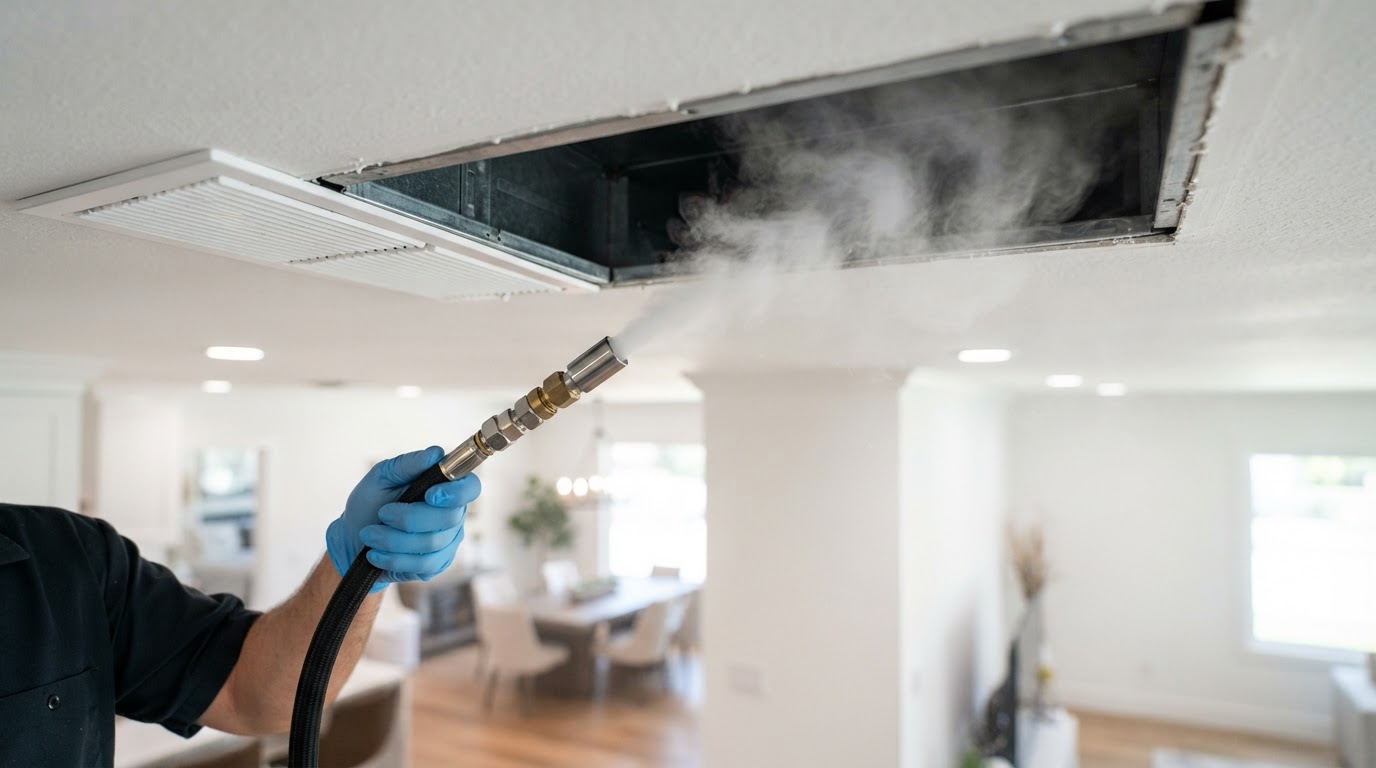
EPA-registered antimicrobial duct sanitizers are products reviewed and listed by the U.S. Environmental Protection Agency for a specific set of microorganisms and a specific use site. Registration means the product was tested for efficacy and labeled with directions a contractor is legally required to follow. That label is your single best source of truth about dwell time, dilution, and re-entry.
Botanical sanitizers — typically thyme-oil based — are marketed as lower-toxicity alternatives. Some carry EPA registration for specific pathogens; others are sold as 'odor neutralizers' without a disinfection claim. If the goal is to reduce microbial load in ductwork, ask for the EPA registration number and the list of organisms the product is effective against. 'Natural' is not the same as 'tested.'
The right choice depends on the building. A hospital, school, or food facility usually requires a hospital-grade, EPA-registered disinfectant with documented sporicidal or broad-spectrum claims. A residential customer with chemical sensitivities may prefer a botanical product with a shorter re-entry window, provided the underlying contamination has been physically removed first.
Either way, the sanitizer is a finish step — not a substitute for removing the dust, mold growth, and biofilm that shelter the organisms you are trying to kill. A provider who leads with 'we fog a sanitizer' and never mentions source removal is selling the wrong service.