Air Duct Cleaning Cost: What Actually Changes the Price
Duct cleaning cost is driven by scope, not a flat rate. System size, included components, method, and access conditions are the variables that move the number.
By AirDuctSanitizingServices.com Editorial Team · 7 min read · February 20, 2026
Air duct cleaning cost is the question every homeowner asks first, and the honest answer is that the price is driven by the scope of work, not a flat rate per home. A complete source-removal cleaning is priced by the home or by the supply and return register count, and the variables that change the number are concrete and knowable before booking. Understanding them is what lets you compare quotes fairly and avoid paying for an incomplete job.
The starting variable is the size of the system. A whole-home cleaning is typically quoted by the register count or as a flat whole-home price, and more registers mean more branches to agitate and more trunk line to clear. A larger home, a multi-system property, or a home with both supply and return runs the full length of the attic all add labor and equipment time. Two HVAC systems in one house usually mean two air handlers and two trunk lines, roughly doubling the scope.
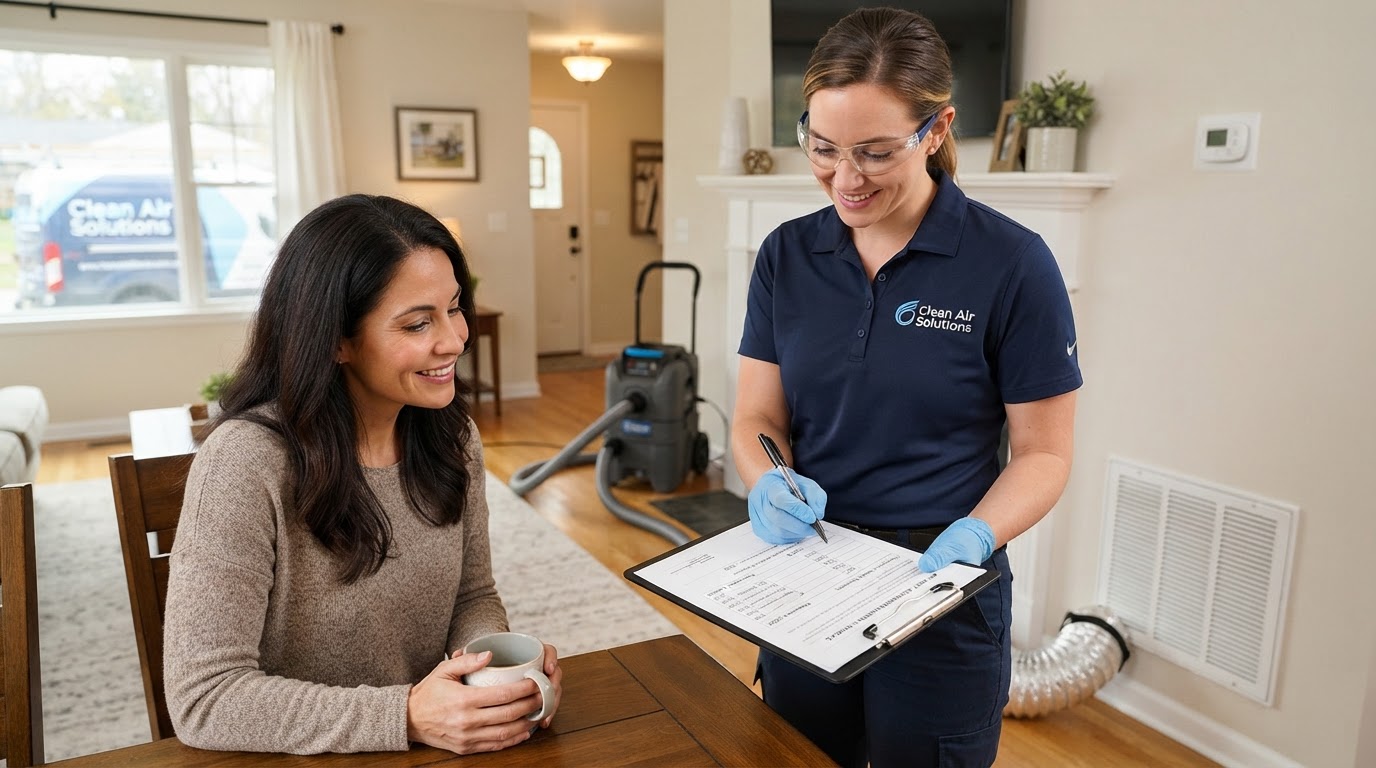
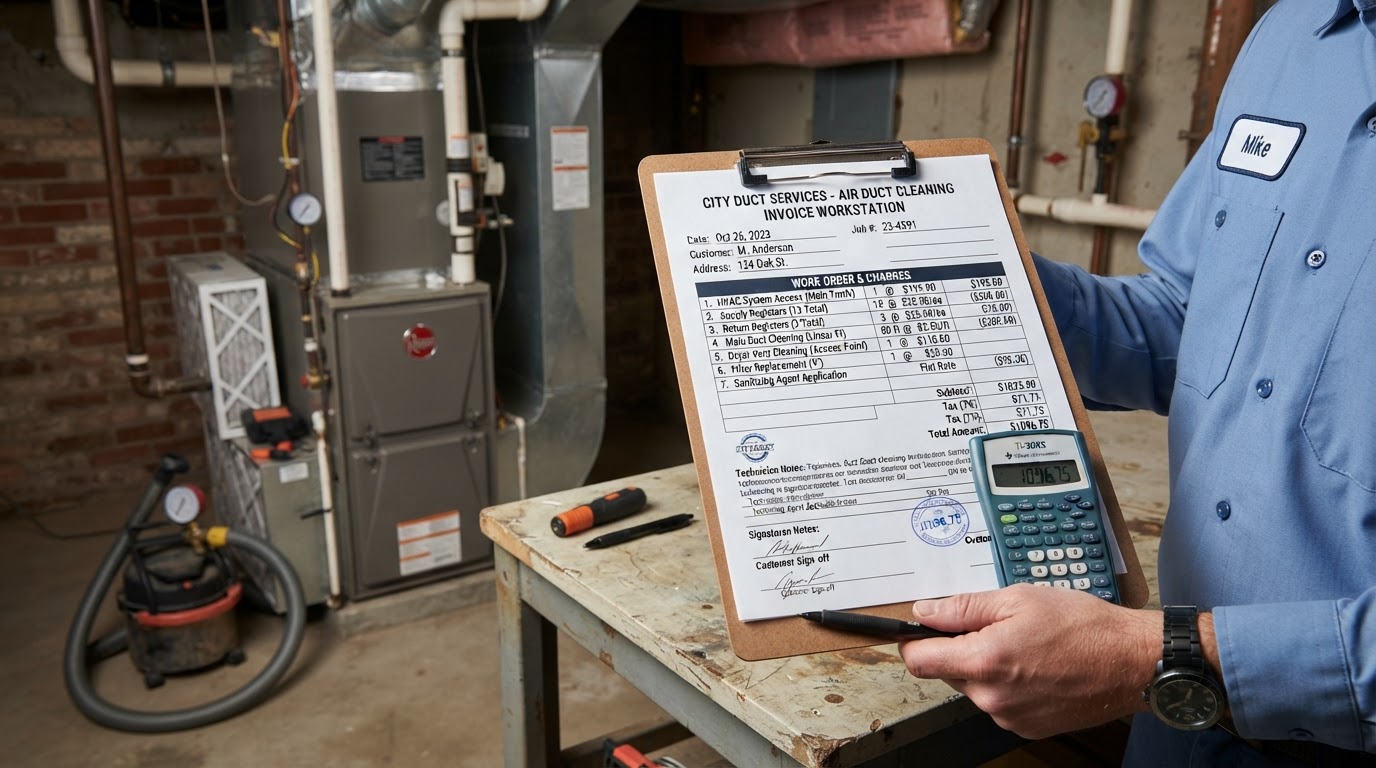
The components included change the air duct cleaning cost significantly. A quote that covers the supply and return branches and trunk but excludes the air handler and evaporator coil is a partial cleaning, and those excluded components are where the heaviest debris and the wettest, most biologically active surfaces sit. A complete cleaning includes the air handler or furnace plenum, the (accessible) coil, and the register boots. Ask each bidder for a written line-item scope and compare what is in and what is out before comparing the totals.
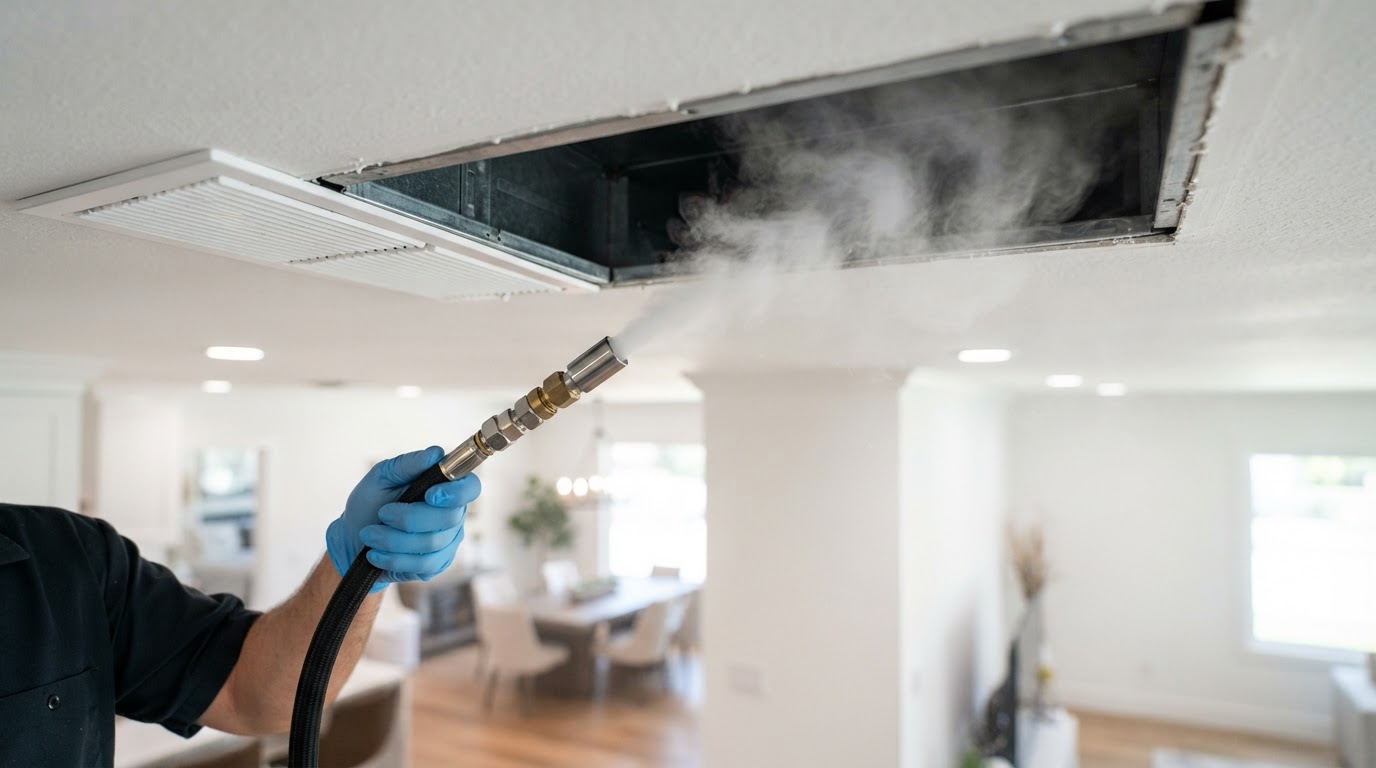
The method is a cost factor, not just a quality one. Source removal — negative-air HEPA vacuuming with mechanical agitation per branch — takes more equipment and more time than a fog-only or blow-and-go visit, and it is priced accordingly. A quote dramatically below the others usually reflects the cheaper method, which moves dust without extracting it. When the price seems too good, the method is usually what was discounted.
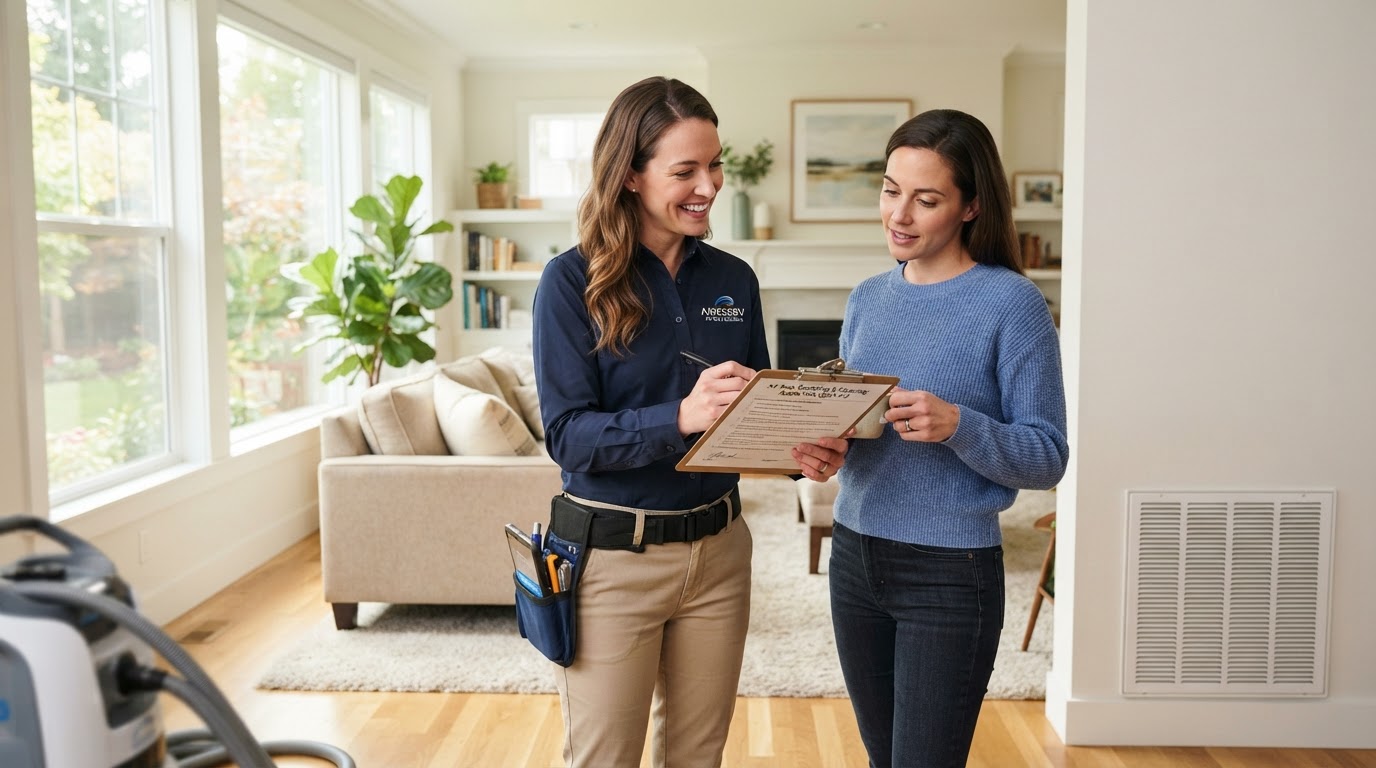
Access conditions add labor. A system with the air handler in a tight crawlspace, trunk lines running through finished ceilings, or runs that require access cutting and later patching all add time, and an honest quote accounts for them after an on-site scope. A flat price quoted without seeing the system, or one that climbs sharply with "unforeseen" access fees, are both signals that the scope was not assessed.
A sanitizing pass, when appropriate, is a separate line item. Not every job needs one, and the product should be an EPA-registered antimicrobial applied to clean duct interiors with a documented dwell time and re-entry protocol. The cost of that add-on is real but should be itemized; a quote that bundles an unnamed sanitizer into a low total is usually a fog-only job dressed up as a complete cleaning.
The realistic way to evaluate air duct cleaning cost is to fix the scope first. Decide that the job includes the trunk, branches, air handler, and coil, specify source removal as the method, and then compare the fixed quotes on equal terms. The lowest number is rarely the complete job; the fair number is the one whose written scope matches the work you want done. Treat a quote that cannot be matched to a complete scope as the cost of a sales visit, and the comparison usually shows which provider is pricing the cleaning you actually want rather than the one easiest to advertise.