Duct Insulation and Condensation: Why Your Ducts Sweat
Sweating ducts wet insulation, grow mold, and stain ceilings. The fix is insulation and vapor control — not a sanitizer — and here is how to scope it.
By AirDuctSanitizingServices.com Editorial Team · 6 min read · May 15, 2026
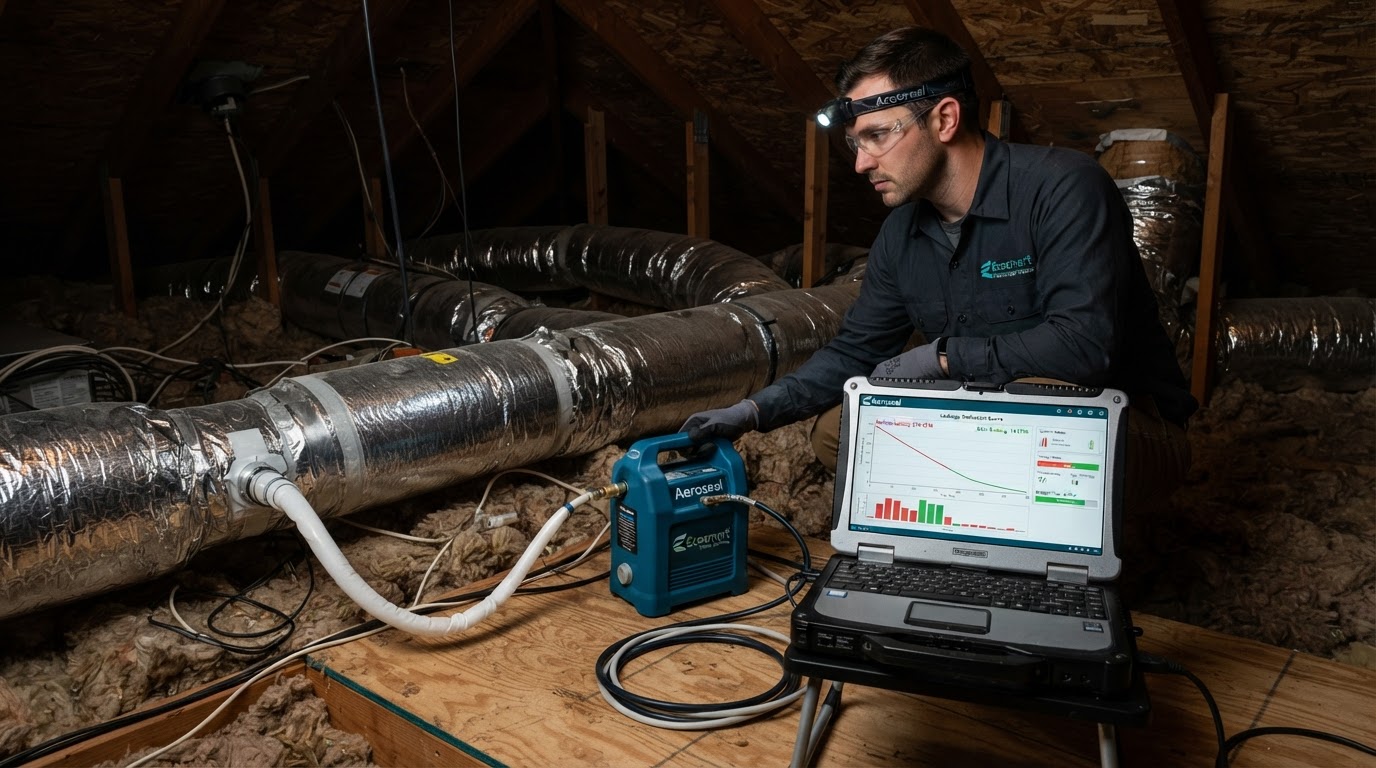
Duct sweat is condensation: warm humid air meets a cold duct surface and the water drops out. It happens in attics, crawlspaces, and even inside finished ceilings when a supply run is under-insulated or the vapor barrier is breached. The water runs along the duct, wets insulation, and grows mold — and no amount of sanitizing fixes it until the thermal condition is corrected.
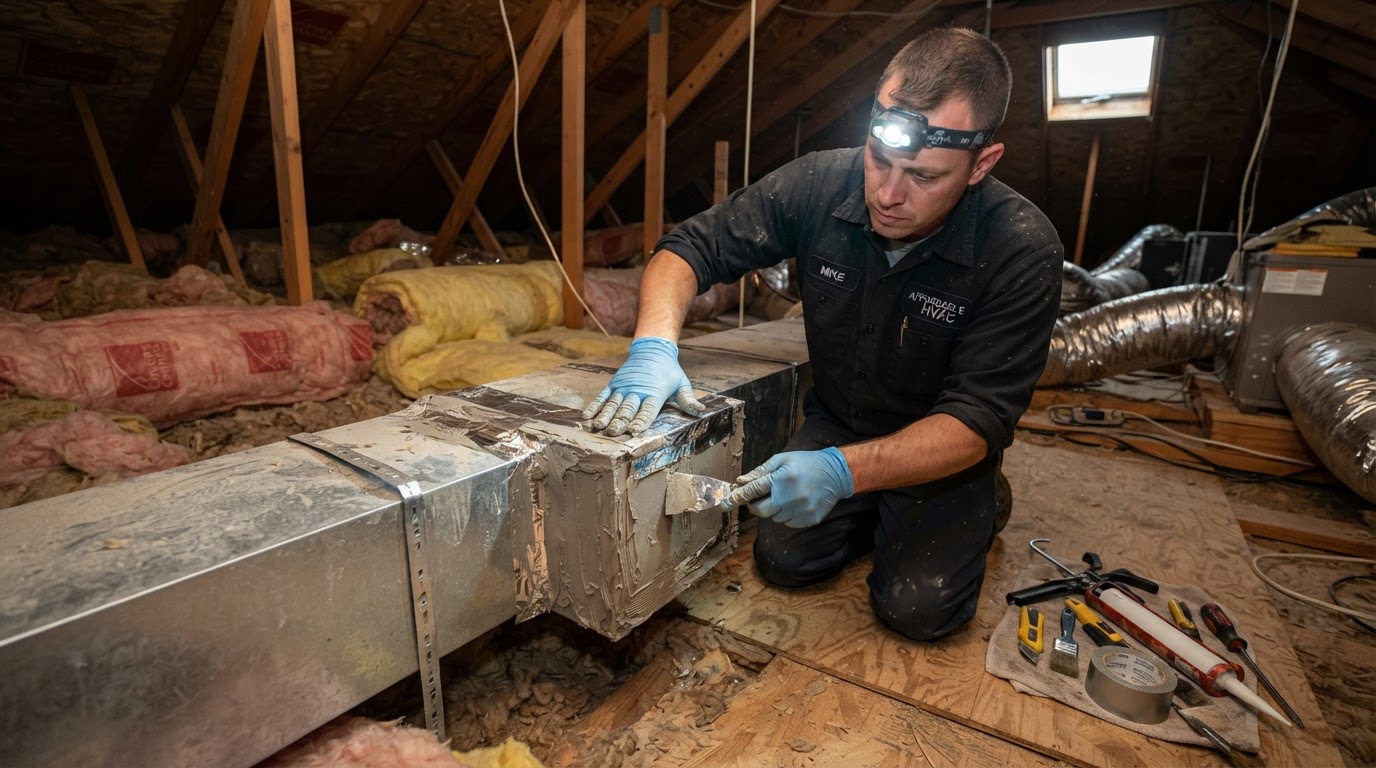
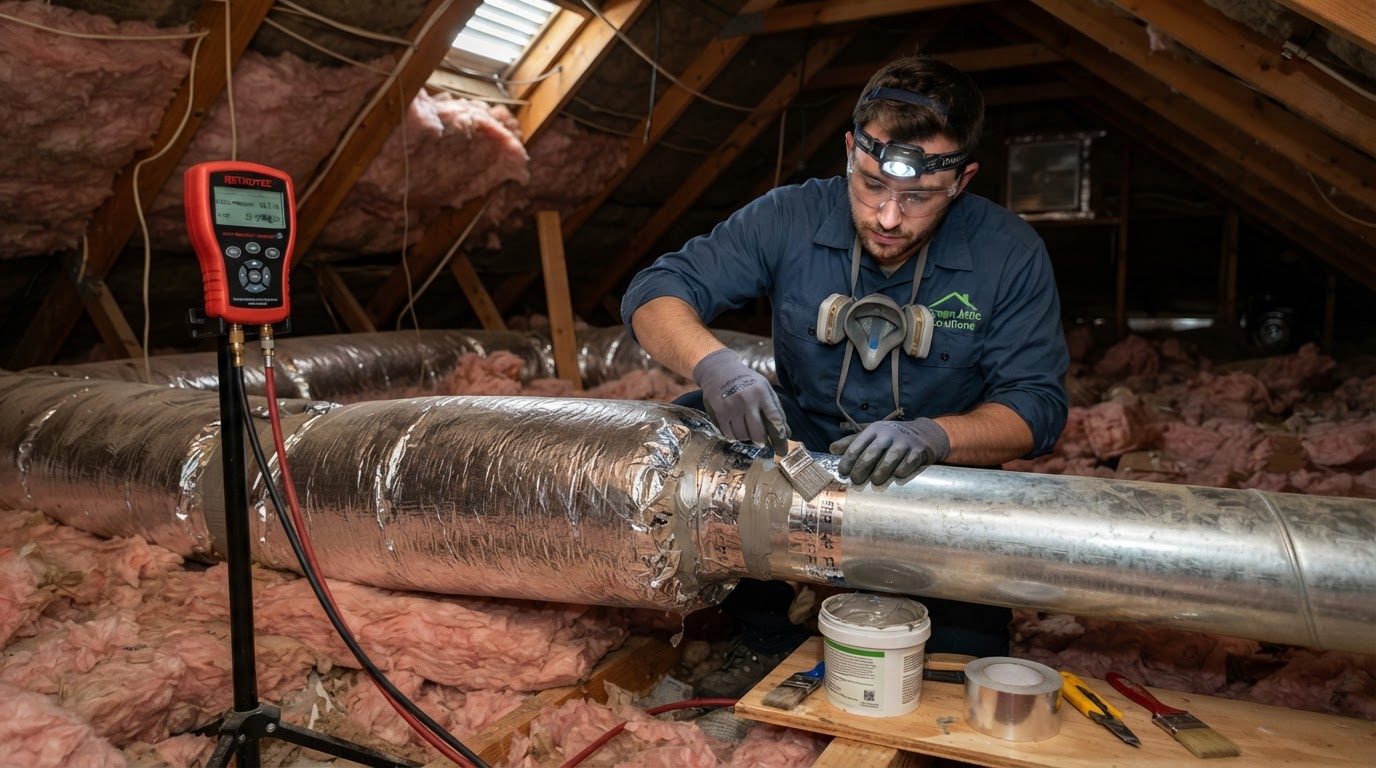
The fix is insulation rated for the environment (external duct wrap with a continuous vapor barrier in unconditioned spaces), sealed joints so humid air cannot reach the cold metal, and adequate clearance so the duct is not pressed against a hot surface that radiates heat unevenly. In a humid climate, a whole-house dehumidifier may also be part of the solution.
When scoping the work, ask the contractor to identify which runs are condensing, why (missing insulation, vapor barrier breach, or an attic that runs above the dew point of the supply air), and to separate the thermal repair from any duct cleaning. Cleaning a wet, moldy duct without fixing the moisture returns you to the same problem within a season.
A reputable provider will show you the ducts that need re-insulation versus those that need cleaning, and quote them as separate line items. Combining them into one number hides whether the moisture problem was actually addressed.