Aeroseal and Internal Duct Sealing: What It Does and Doesn't Fix
Aerosolized polymer sealing is a real, measured technology for duct leakage — but it is not a substitute for cleaning, insulation, or external joint sealing.
By AirDuctSanitizingServices.com Editorial Team · 8 min read · May 22, 2026
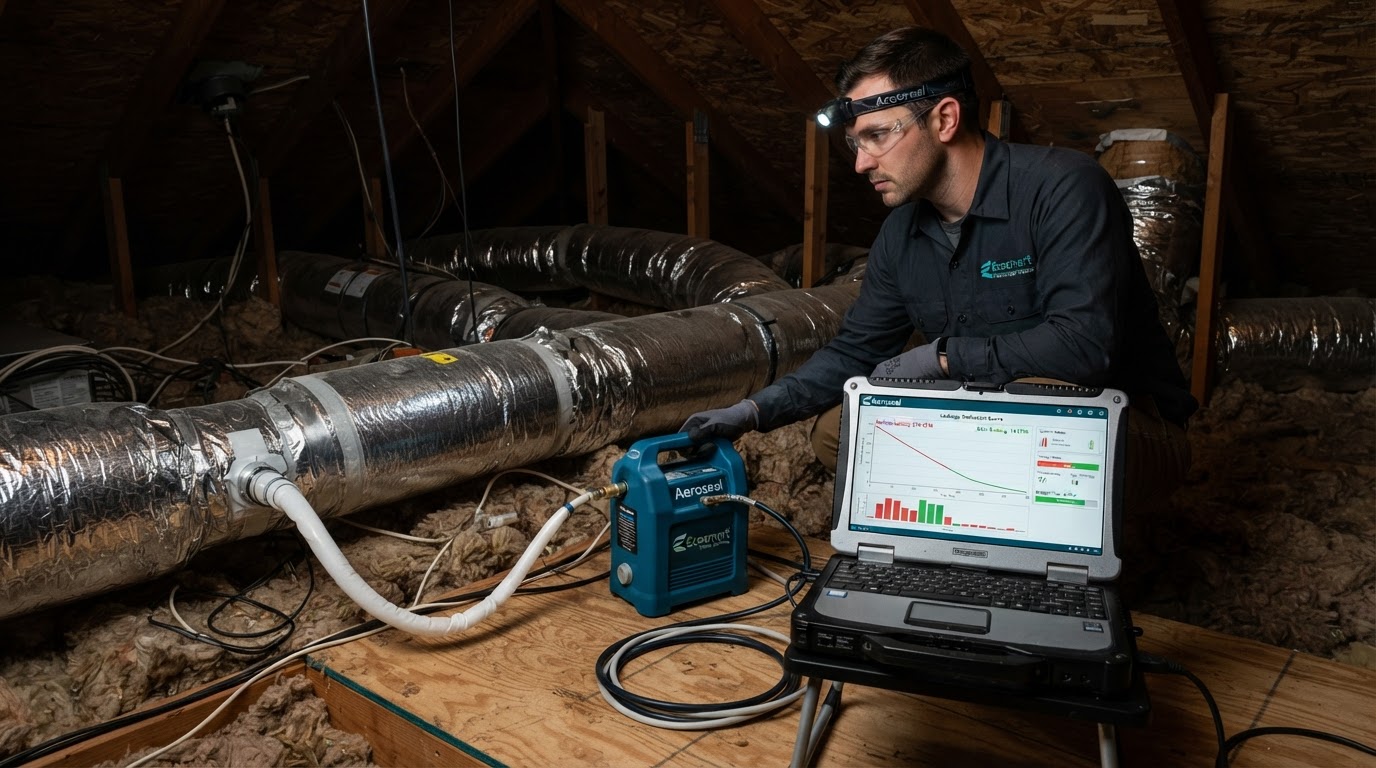
Aeroseal and similar aerosolized internal duct sealing systems inject a vinyl-polymer mist into a pressurized duct. The particles are too large to deposit in the main airflow but lodge at the leaks where the airstream accelerates, building up and sealing the joint from the inside. The process is measured: a computer reports the before-and-after leakage in CFM at a reference pressure.
What it does well is seal leaks that are hard to reach — joints inside walls, behind finished ceilings, and at boot-to-register connections that would require demolition to reach externally. For long runs with many small leaks, the measured reduction can be significant and the energy and comfort payoff real.
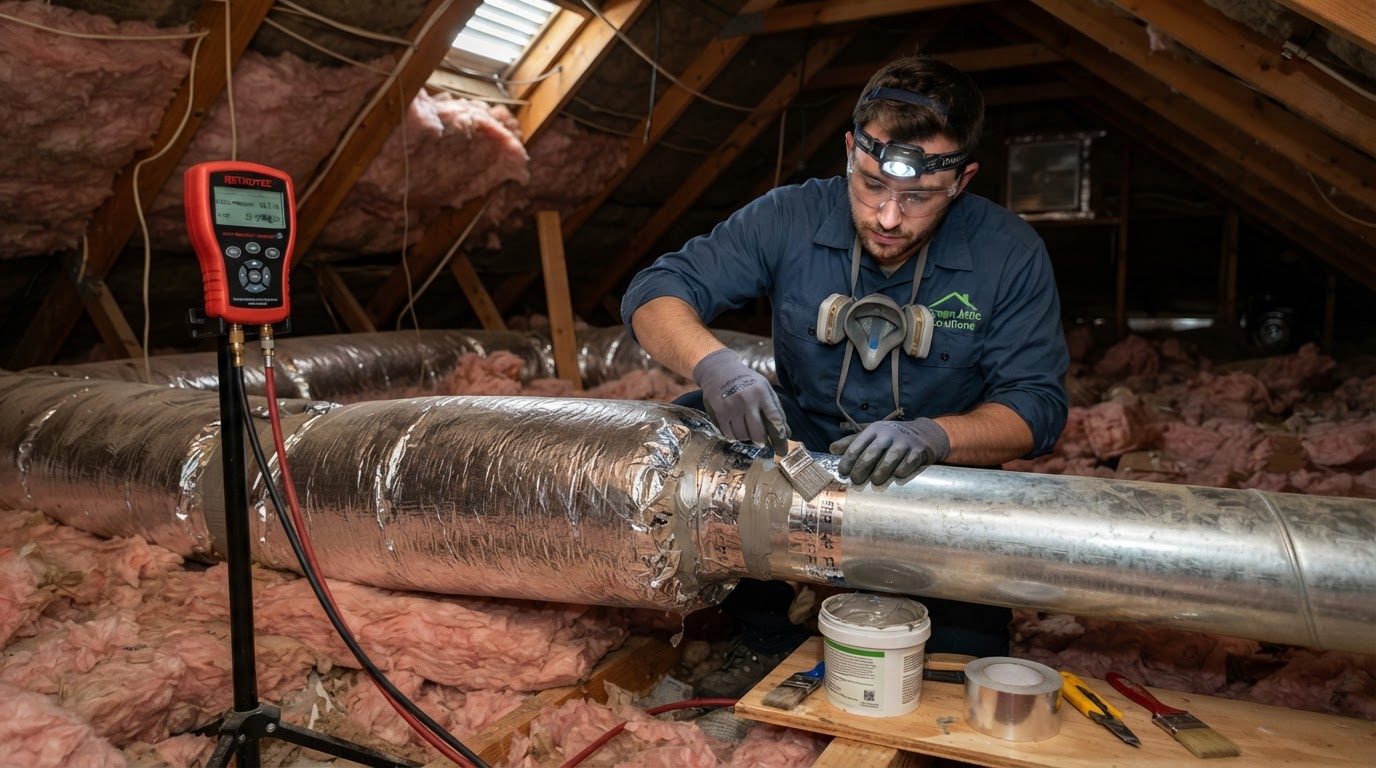
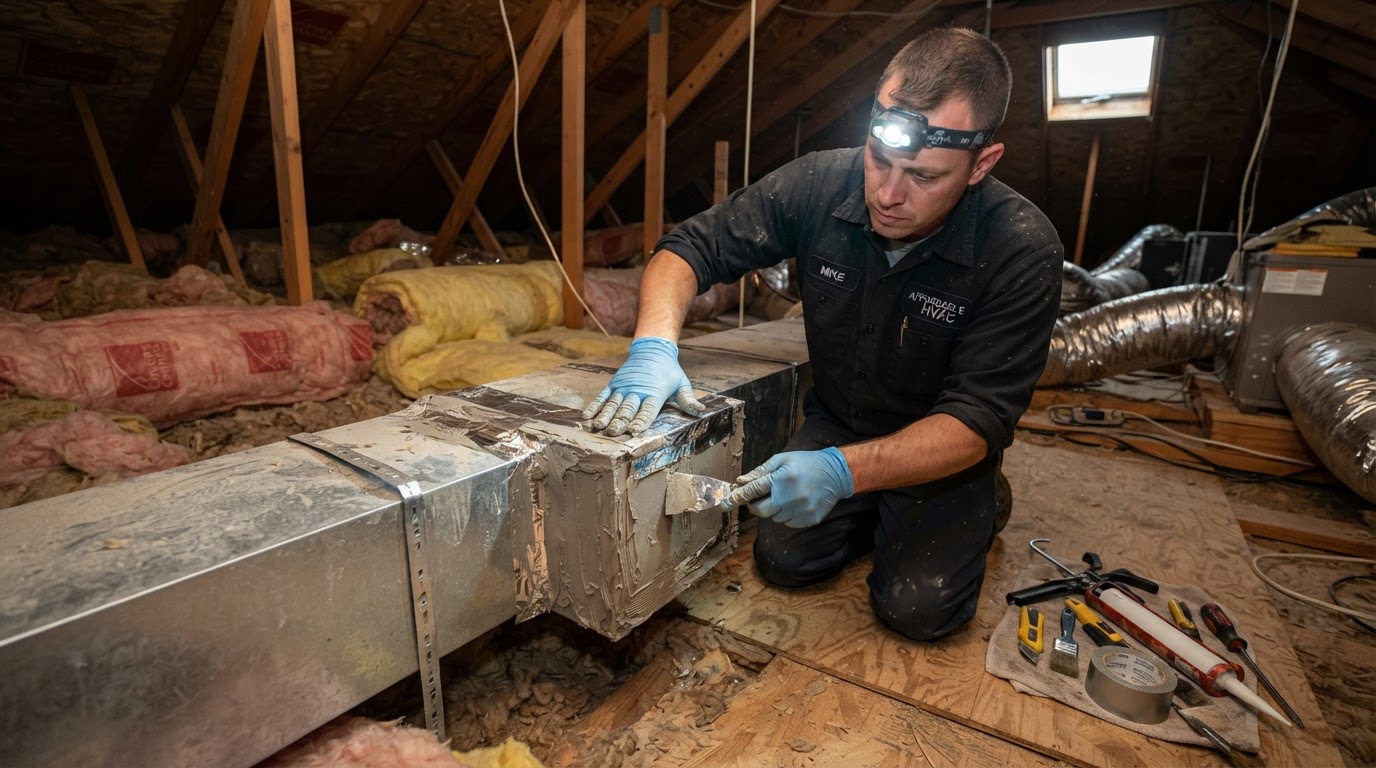
What it does not fix is the large visible gap at a disconnected duct, a crushed section, or missing external insulation. It also does not clean the duct; in fact, sealing is usually performed after a cleaning so the polymer bonds to a clean surface. And it does not replace external mastic and foil-tape sealing at accessible joints, which remains the durable first line of defense.
Ask for the leakage test report. A provider who can show you the measured CFM reduction at 25 Pa is delivering the documented value of the technology. A provider who quotes sealing without measurement is selling the brand name without the verification that makes it worth paying for.