Commercial Kitchen Ventilation Cleaning: Grease, Fire Codes, and Schedules
Restaurant exhaust systems collect flammable grease over every shift, and ventilation cleaning is the documented, code-required maintenance that keeps them safe.
By AirDuctSanitizingServices.com Editorial Team · 8 min read · March 13, 2026
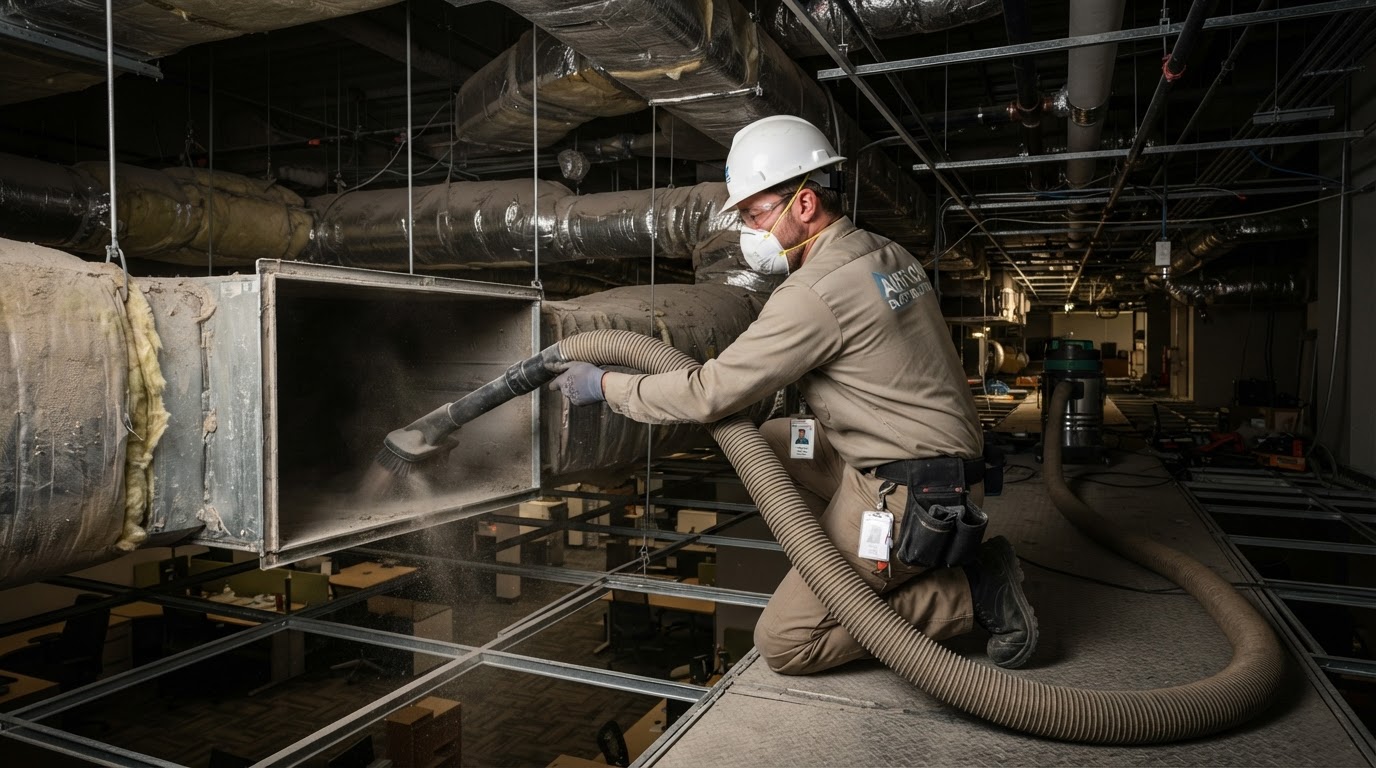
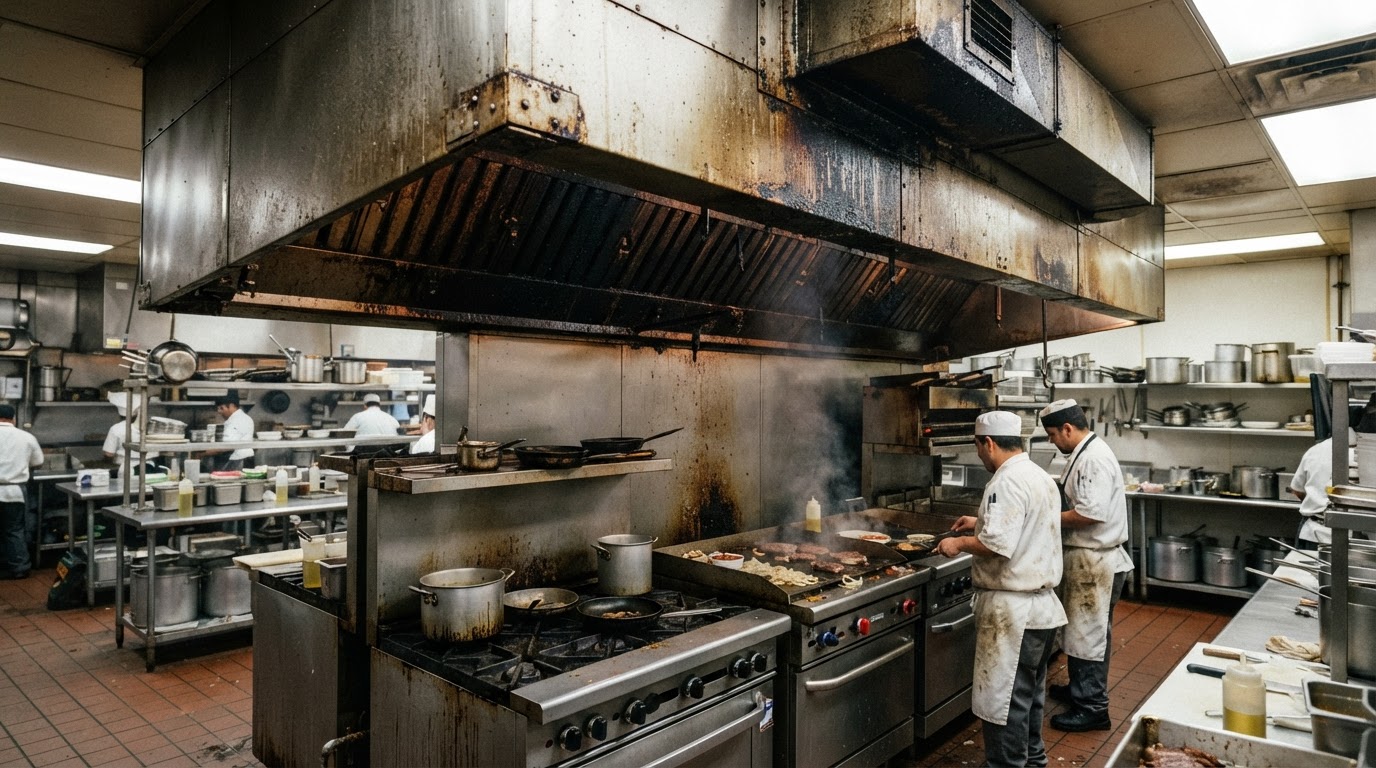
In a commercial kitchen, the ventilation system is the first line of defense against grease fires, and ventilation cleaning is the maintenance that keeps it functional. Restaurant exhaust hoods, canopy ducts, and rooftop fans collect flammable grease over every cooking shift, and the accumulation is what turns a small flare-up into a duct fire. The work is both operational and regulatory, and understanding the scope helps owners schedule it correctly.
The system extends from the hood canopy over the cooking line, through the ductwork above the ceiling, to the exhaust fan on the roof. Each section collects grease differently. The hood canopy and its baffles catch the heaviest deposits; the horizontal duct runs accumulate a sticky film; the rooftop fan, where the air cools, builds up a layer that drips back into the duct. A complete ventilation cleaning addresses every section, not only the visible hood.
The fire code framework is the reference point for frequency. NFPA 96, the Standard for Ventilation Control and Fire Protection of Commercial Cooking Operations, is the most widely adopted guideline in North America, and it sets cleaning intervals based on the type and volume of cooking. High-volume operations such as charbroilers and wok ranges are typically inspected and cleaned quarterly or more often; moderate-volume kitchens semi-annually; low-volume operations such as churches or camps at least annually. The standard also requires that cleaning be performed by properly trained personnel and documented.
The cleaning method itself is a degreasing process, not a dry duct cleaning. Technicians scrape and remove heavy grease deposits from the hood, plenum, and duct interior; apply a food-grade degreaser; pressure-wash or steam-clean the accessible surfaces; and clean or replace the grease filters. The rooftop fan is accessed, the fan housing and blades degreased, and the grease trough or collection cup emptied. The work generates a grease-laden wastewater stream that must be captured and disposed of properly, which is why professional crews use containment tarps and collection systems inside the kitchen.
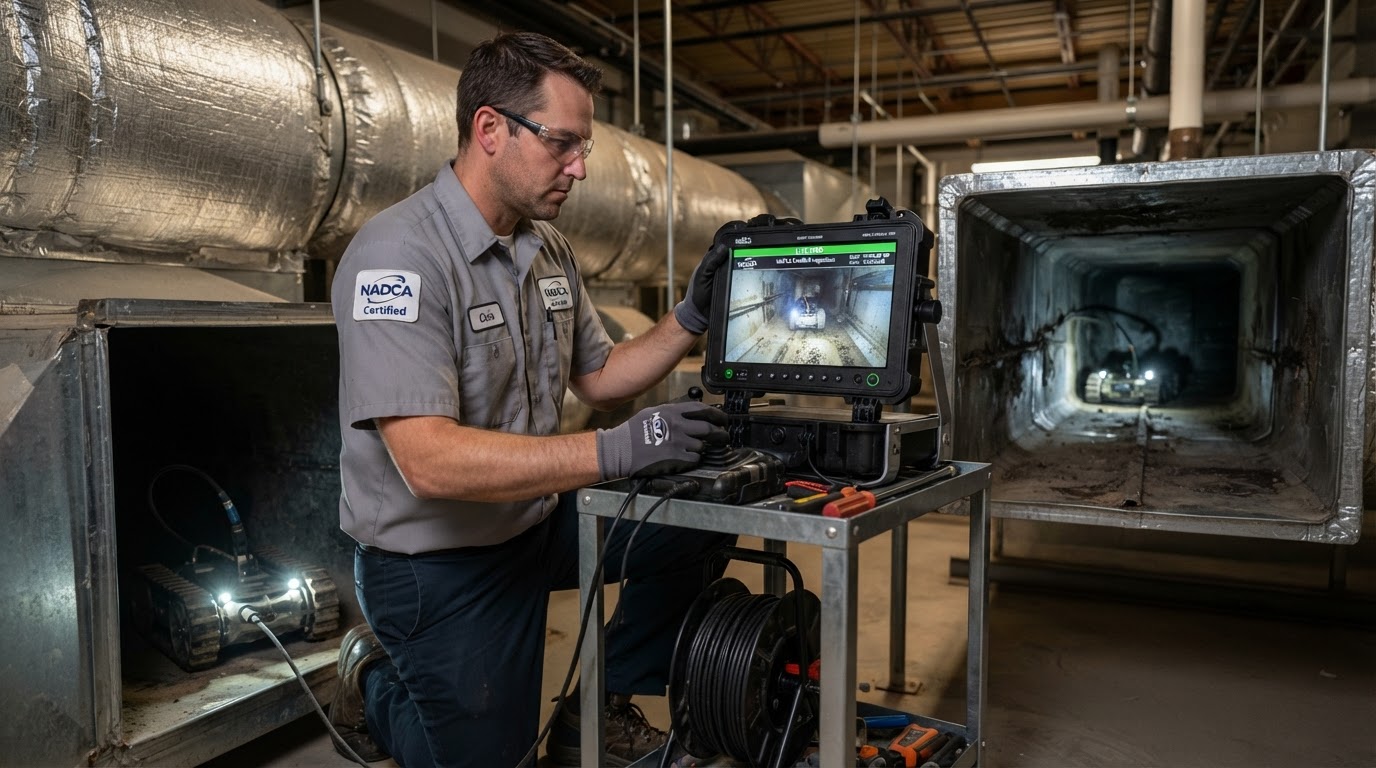
Documentation is the deliverable that matters for inspection. After a ventilation cleaning, the provider should leave a cleaning report and, where required, a posted certificate indicating the date cleaned, the next due date, and the areas serviced. Photos of the before and after conditions, particularly inside the duct and at the fan, are the evidence a fire marshal or insurer may ask for. A service that ends without paperwork has cleaned the kitchen but not satisfied the documentation requirement.
Kitchen operators should also distinguish the exhaust ventilation cleaning from the make-up air and HVAC ductwork serving the dining and kitchen spaces. The grease-laden exhaust system is the fire-risk cleaning; the conditioned-air ductwork is a separate indoor air quality service with its own scope and schedule. Confusing the two leads to either under-servicing the exhaust or over-scoping a clean-air system.
The practical guidance for owners: match the cleaning interval to your cooking type and volume, use a trained and insured provider, require a written report and posted certificate, and inspect the work between scheduled cleanings — a hood that re-greases faster than the schedule anticipates means the interval is too long or the filters are wrong. Ventilation cleaning is not an optional janitorial task; under NFPA 96 and most local fire codes it is a required, documented, and scheduled safety maintenance, and the cost of skipping it is measured in fire risk, failed inspections, and insurance exposure rather than grease alone.