Commercial HVAC Duct Decontamination: Why Scoping Comes First
Large commercial systems are rarely uniform. Robotic inspection and a written remediation plan protect building owners from paying for the wrong scope.
By AirDuctSanitizingServices.com Editorial Team · 9 min read · August 14, 2026
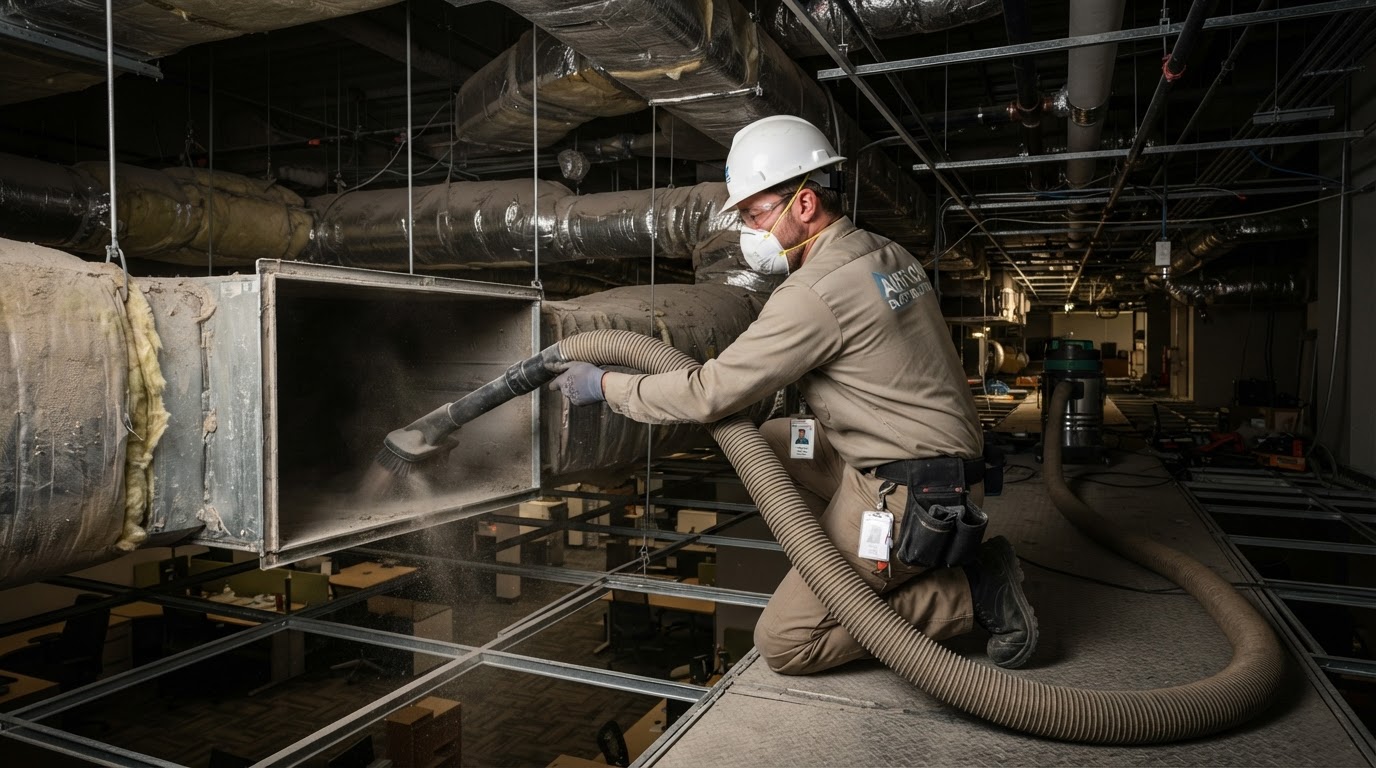
Commercial ductwork often runs for hundreds of feet across multiple floors, with branches of different sizes, interior fiberglass liner, and rooftop air handlers that are difficult to access. A blanket quote 'to clean the ducts' is not meaningful without a scoping visit that maps the system and documents what is actually inside it.
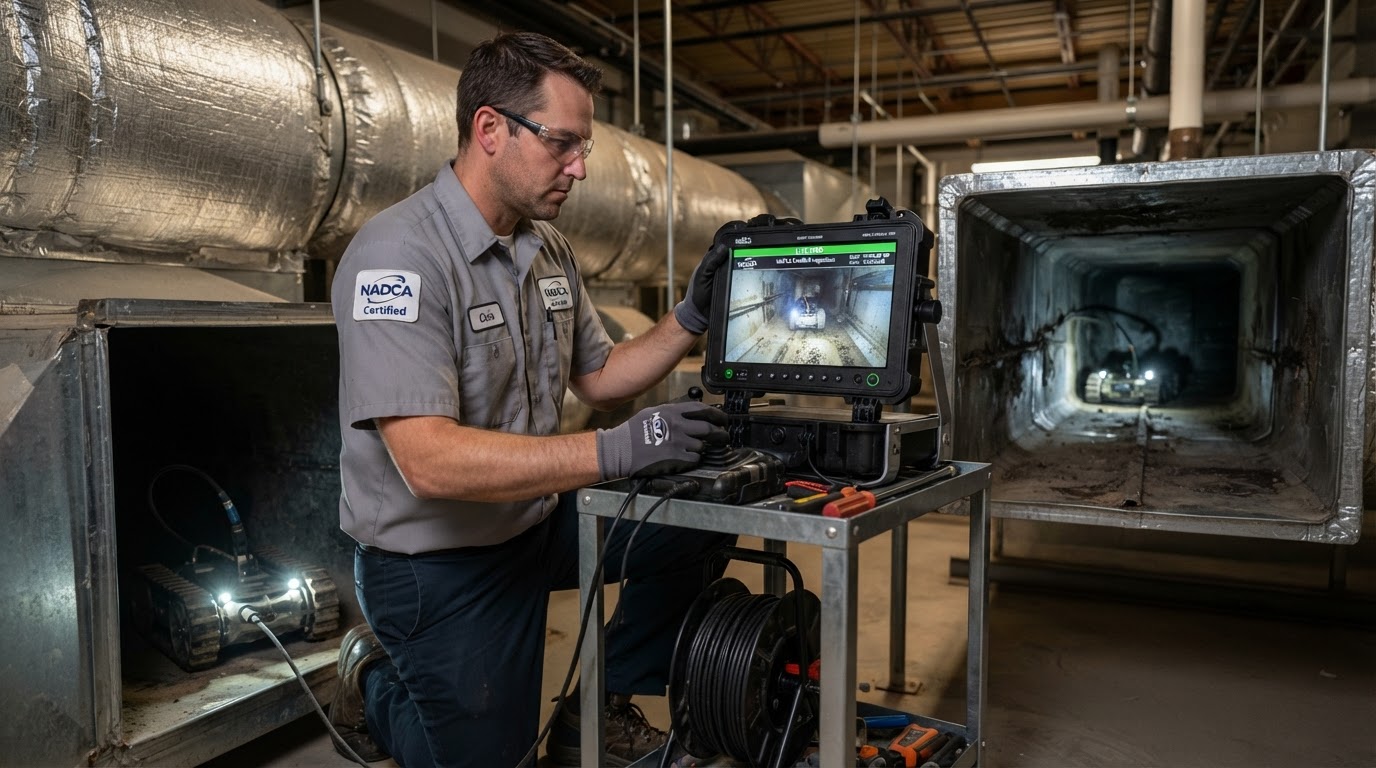
A proper scope uses robotic inspection crawlers or push cameras to record interior conditions at representative points — supplies, returns, mixing boxes, and VAV boxes. The video evidence becomes the baseline for the remediation plan and, for healthcare and education clients, the documentation required by NADCA's ACR Standard and IAQ guidelines.
The written plan should specify which sections are accessible by direct agitation versus those that require access cutting, whether any interior fiberglass liner requires encapsulation instead of removal, and how the air handlers, coils, and drain pans will be treated. Without that plan, change orders are almost guaranteed.
For occupied buildings, the plan also schedules work in zones and after hours, coordinates with facilities and security, and defines containment so debris does not migrate from one tenant's space to another. The cheapest commercial bid is frequently the one that skipped this step — and the cleanup costs more than the savings.