
A Practical Guide to Air Vent Cleaning Near Me
A local search for vent cleaning should resolve the cause, not just wipe the cover. The durable result comes from cleaning the branch and trunk behind the register.
By AirDuctSanitizingServices.com Editorial Team · 8 min read · January 30, 2026
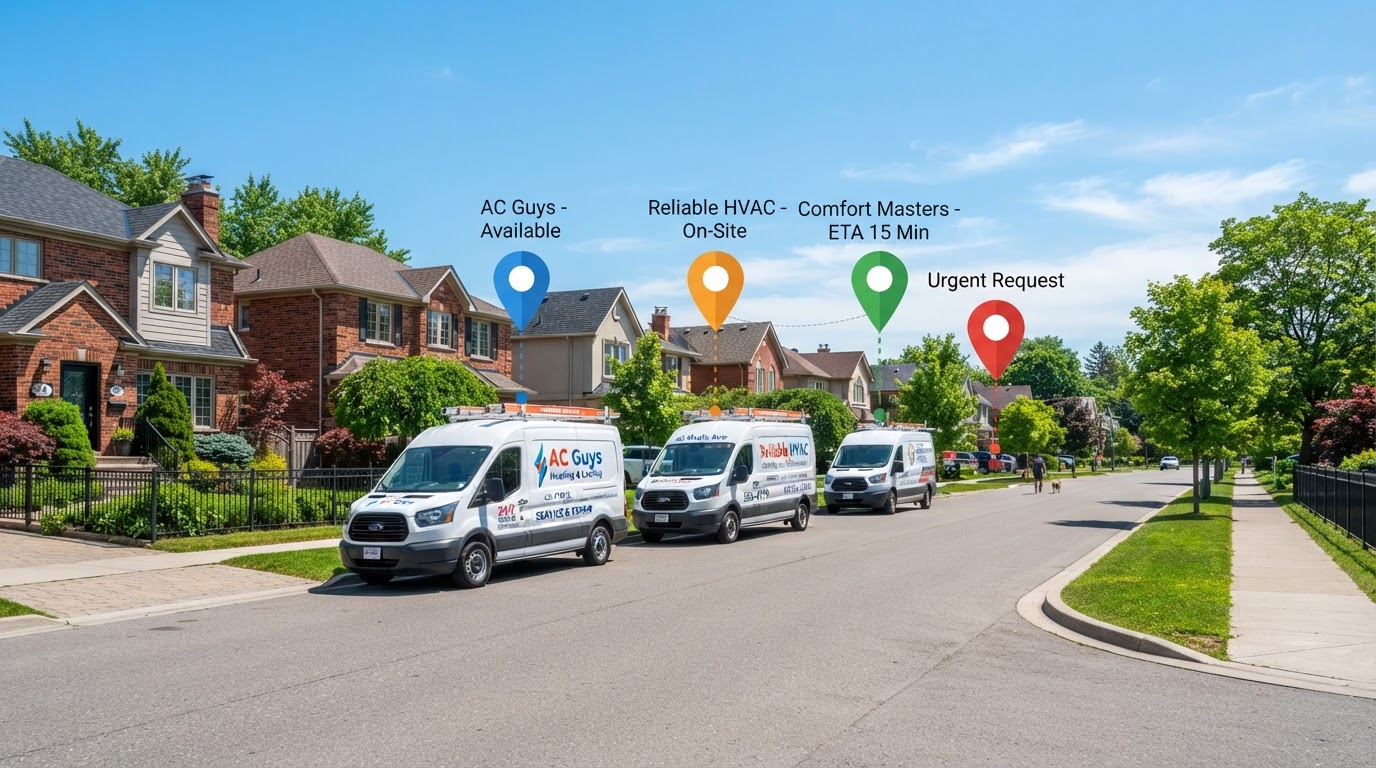
Searching "air vent cleaning near me" usually starts with a symptom — dust blowing from the registers, a musty smell when the system runs, or visible buildup around a vent cover — and the goal is to find a local provider who can address the cause rather than the surface. The vent covers are the most visible part of the HVAC system, but the work that resolves the symptom almost always happens deeper in the ductwork, which is why the right local search strategy matters.
The first clarification is vocabulary. "Air vent cleaning" in a residential context usually means cleaning the supply and return register boots and the branch ducts behind them, and in practice it overlaps with whole-duct source removal. A service that wipes down the vent covers but does not reach the branch or trunk is a cosmetic job, not a cleaning. When you search for air vent cleaning near me, ask each candidate whether the work includes the branch lines and the trunk, or only the register openings.
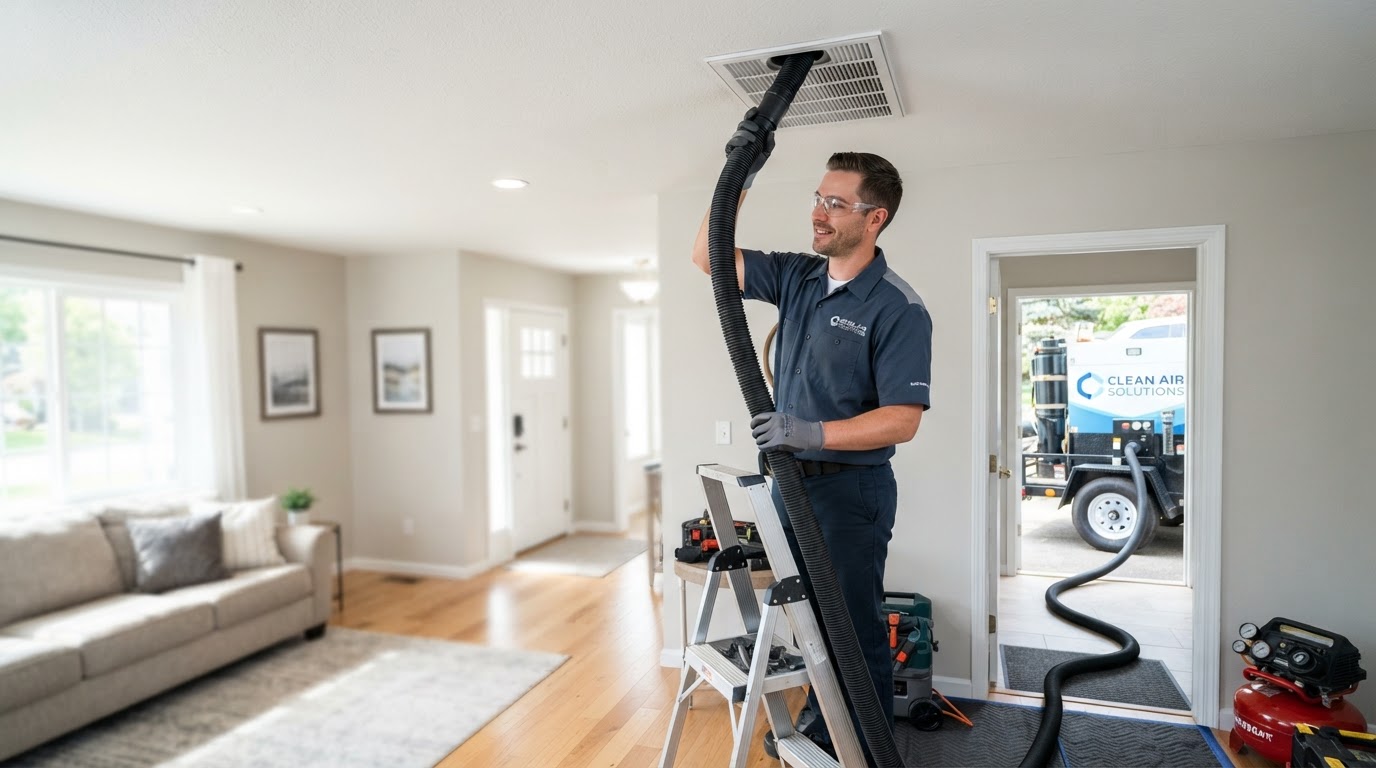
The method determines whether the symptom is resolved. Source removal — a HEPA-filtered negative-air machine on the trunk with mechanical agitation of each branch — extracts the dust and debris that the register blows into the room. A blow-and-go method that pushes air down a vent redistributes the dust without removing it, which is why the dust returns within days. A local provider who can describe the equipment they bring is easier to evaluate than one who can only quote a price.
The symptom-to-cause mapping is worth doing before booking. Dust at a single register often points to a branch run that is disconnected or crushed upstream; a musty smell localized to one room can mean growth at that boot or in the adjacent trunk. Whole-home dust or odor, by contrast, points to the air handler, the coil, or the main trunk. A capable local provider scopes the system before quoting — and a quote that arrives without anyone looking at the ducts is a quote for a guessed scope.
Credentials are the local filter. NADCA certification, general liability insurance, and any required state HVAC licensing are the baseline checks, and NADCA membership is verifiable through the association's directory. Local reviews are useful for service patterns — punctuality, communication, cleanup — but they do not confirm a source-removal method, so weight them alongside the method and credential questions rather than in place of them.
Scope and pricing reveal the honest local providers. A written, line-item quote listing the registers, branches, trunk, air handler, and coil is the structure that tends to deliver the work it describes; a low flat number that excludes the trunk and coil is the structure that tends to deliver an upsell. The best local result usually comes from the provider whose quote is the most specific about what gets cleaned and how, not the one whose number is the lowest.
The practical approach: when you search air vent cleaning near me, narrow by method and scope first, confirm the work reaches the branch and trunk, and require a written quote and before-and-after documentation. The vent cover is the visible part, but the durable result comes from cleaning the duct behind it and the air handler that feeds it. A local provider who scopes the system, names the method, and puts the scope in writing is the one the search is meant to find — and the difference between that result and a wiped vent cover is the difference between resolving the symptom and dressing it up.