What a Professional Dryer Vent Cleaning Service Actually Includes
A complete dryer vent service clears the full exhaust run from the dryer to the exterior wall and verifies airflow — not just the lint trap. Here is what the appointment should cover.
By AirDuctSanitizingServices.com Editorial Team · 6 min read · April 17, 2026
A professional dryer vent cleaning service is more than running a brush through the back of the dryer. The duct between the dryer and the exterior wall is a complete exhaust system, and a thorough service cleans every component in the path lint travels — not just the section that is easy to reach. Knowing what the appointment should include helps you tell a complete job from a quick pass.
The service starts at the dryer. The technician disconnects the dryer from its power and, for gas dryers, confirms the gas supply is secure before moving the appliance. The transition hose — the short flexible connection behind the dryer — is inspected and, if it is the foil or plastic type that most building codes discourage, replaced with a rigid or semi-rigid metal duct. That transition is the first place lint collects and the first place a restriction forms.
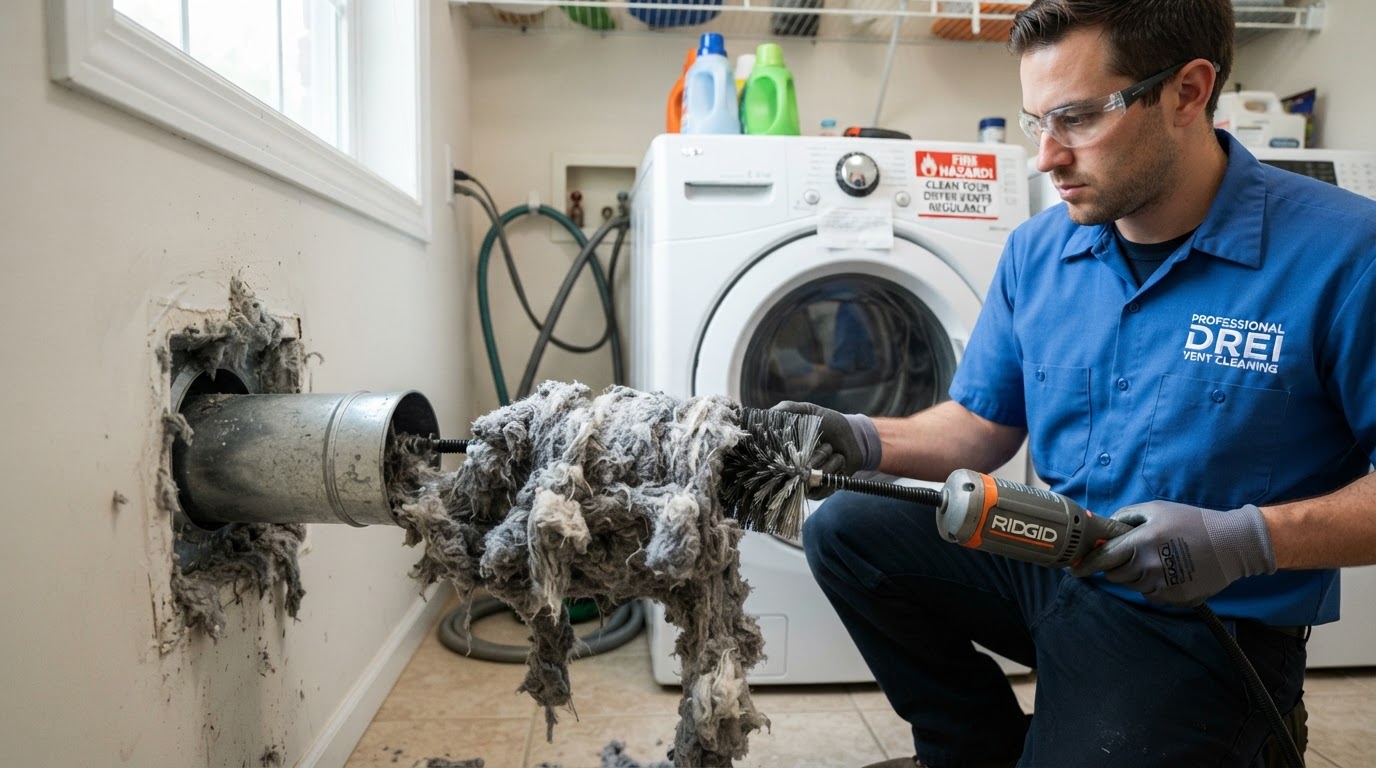
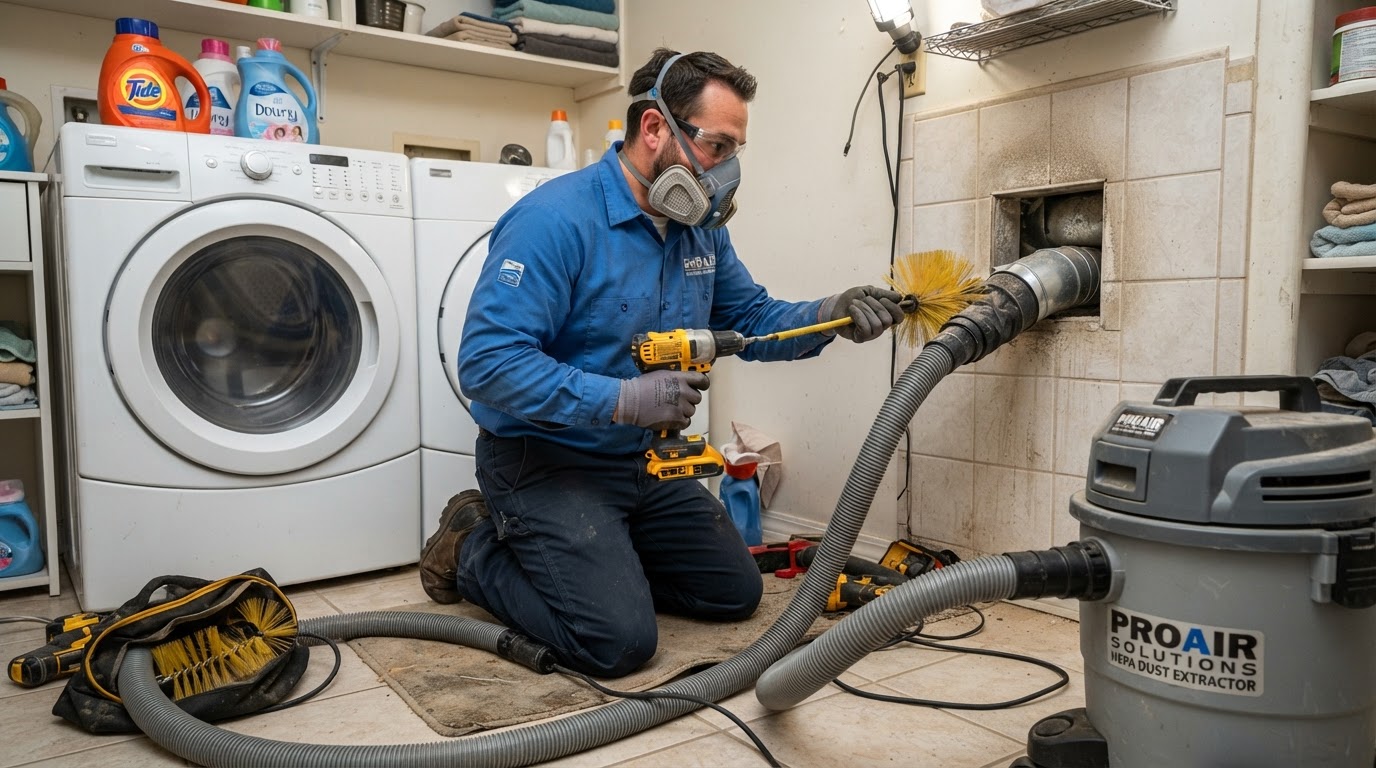
From there, the main run is cleaned. A rotary nylon brush sized to the duct diameter is fed through the full length of the run, from the dryer outlet to the exterior termination, while a coordinated HEPA vacuum pulls the loosened lint out rather than pushing it deeper. Each elbow is brushed separately, because lint packs at every change of direction. A run with multiple ninety-degree elbows is cleaned in sections if the brush cannot navigate the full path in one pass.
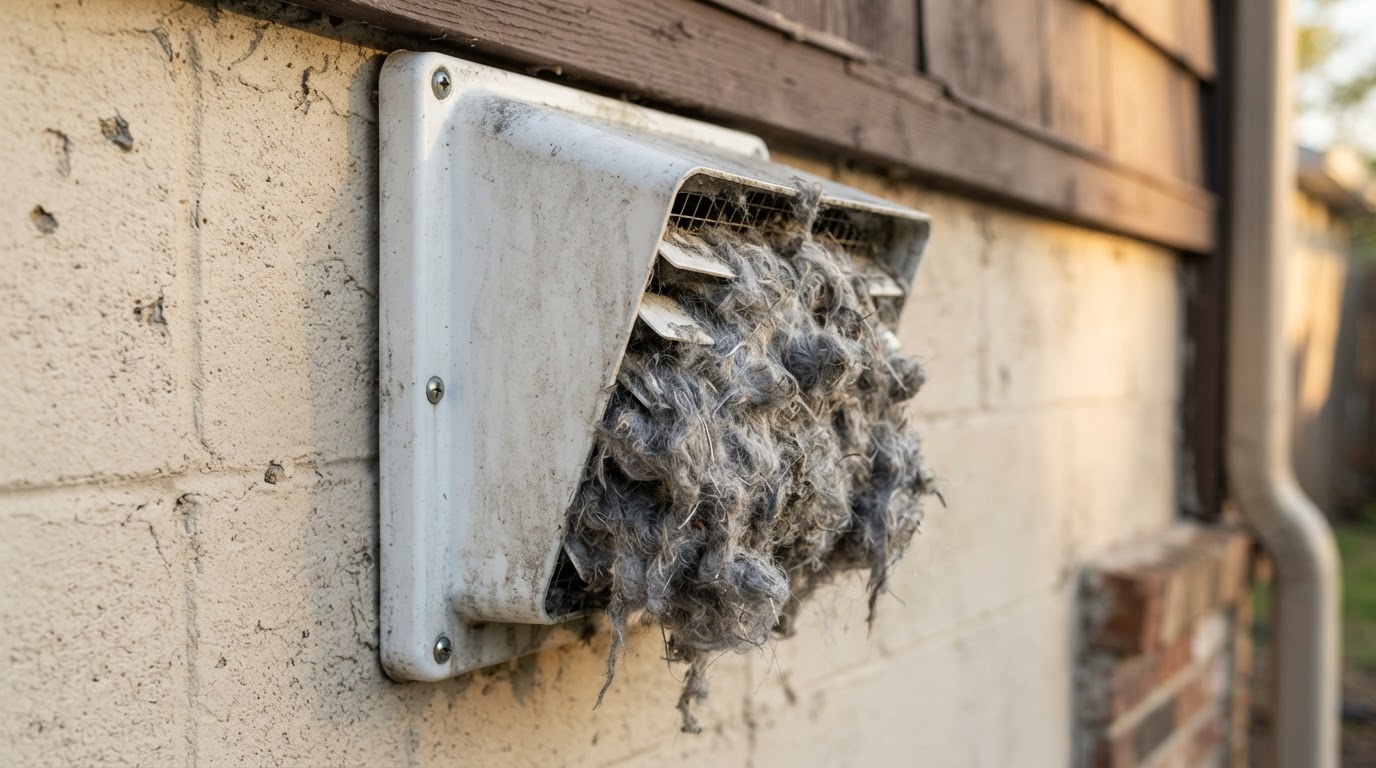
The exterior termination is the next checkpoint. The wall hood is removed or opened, the flapper is inspected for free movement, and the hood interior is cleared of the lint that cakes against it. A flapper that sticks shut — from paint, lint, or a damaged spring — is what re-clogs the duct within months of cleaning. If the hood is damaged or the wrong type, a reputable dryer vent cleaning service will recommend replacing it rather than leaving a known failure point.
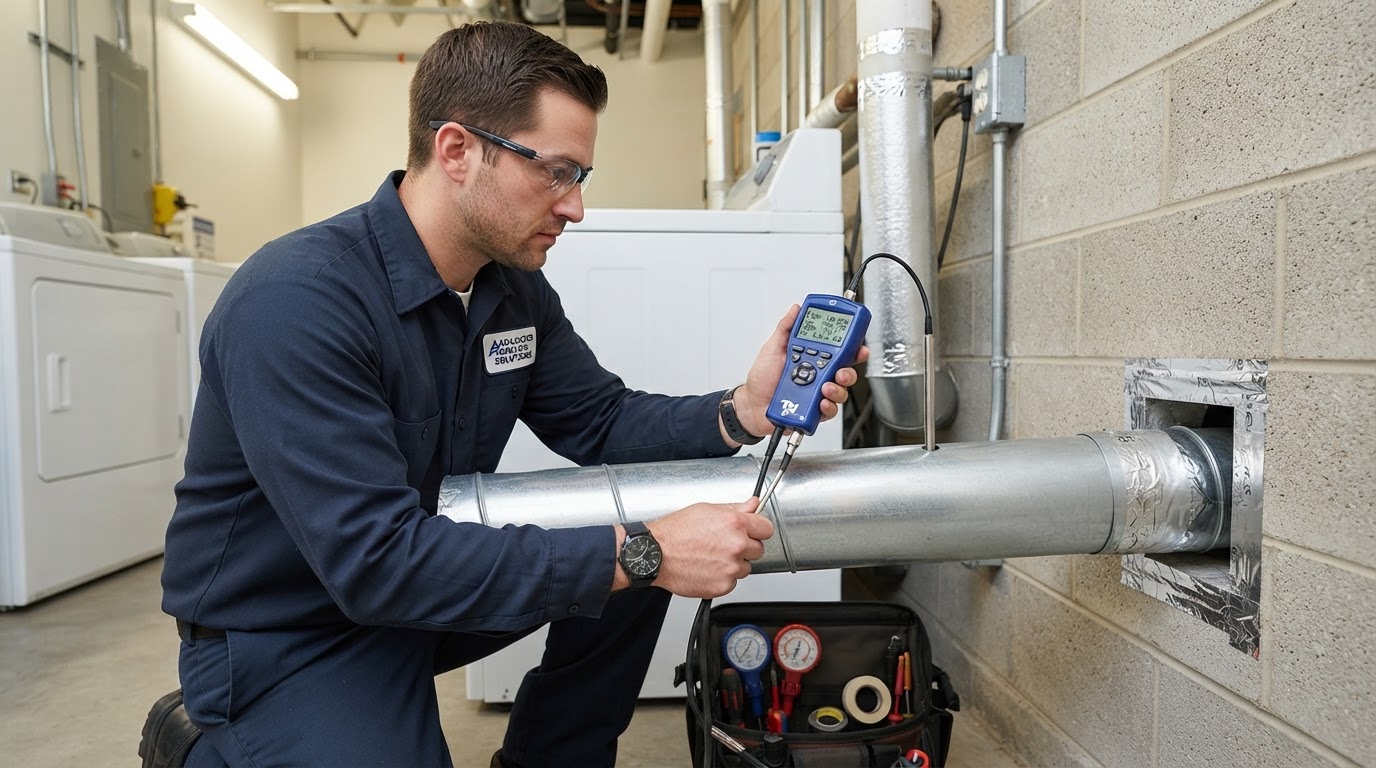
Once the run is clear, the technician verifies airflow. The simplest check is running the dryer on a no-heat or air-fluff cycle and confirming strong, consistent airflow at the exterior hood. For longer or problem runs, an anemometer measures the airflow in cubic feet per minute and a manometer can check static pressure against the dryer manufacturer's limits. The reading tells you whether the cleaning solved the restriction or whether the run is undersized, over-length, or crushed and needs re-routing.
For some homes the service also includes access cutting. A run that travels through finished walls or between floors may require the technician to cut an access panel at a bend to reach a packed section, then patch and seal it afterward. That work is part of a complete service, not an extra, and it should be quoted before the cutting begins.
What the service does not include is equally important. It does not clean the dryer's internal lint path or heating element — that is a separate appliance service — and it does not extend a vent run that violates the manufacturer's maximum equivalent length. A clear dryer vent cleaning service ends with a written summary of what was cleaned, the measured airflow, and a recommended return interval. Insist on that summary; it is the difference between paying for a service and paying for a visit.