Finding Reliable Dryer Cleaning Services Near Me
A local dryer cleaning service should clear the full exhaust run with a brush and vacuum and verify airflow — not just empty the lint trap. Here is how to vet one.
By AirDuctSanitizingServices.com Editorial Team · 9 min read · January 23, 2026
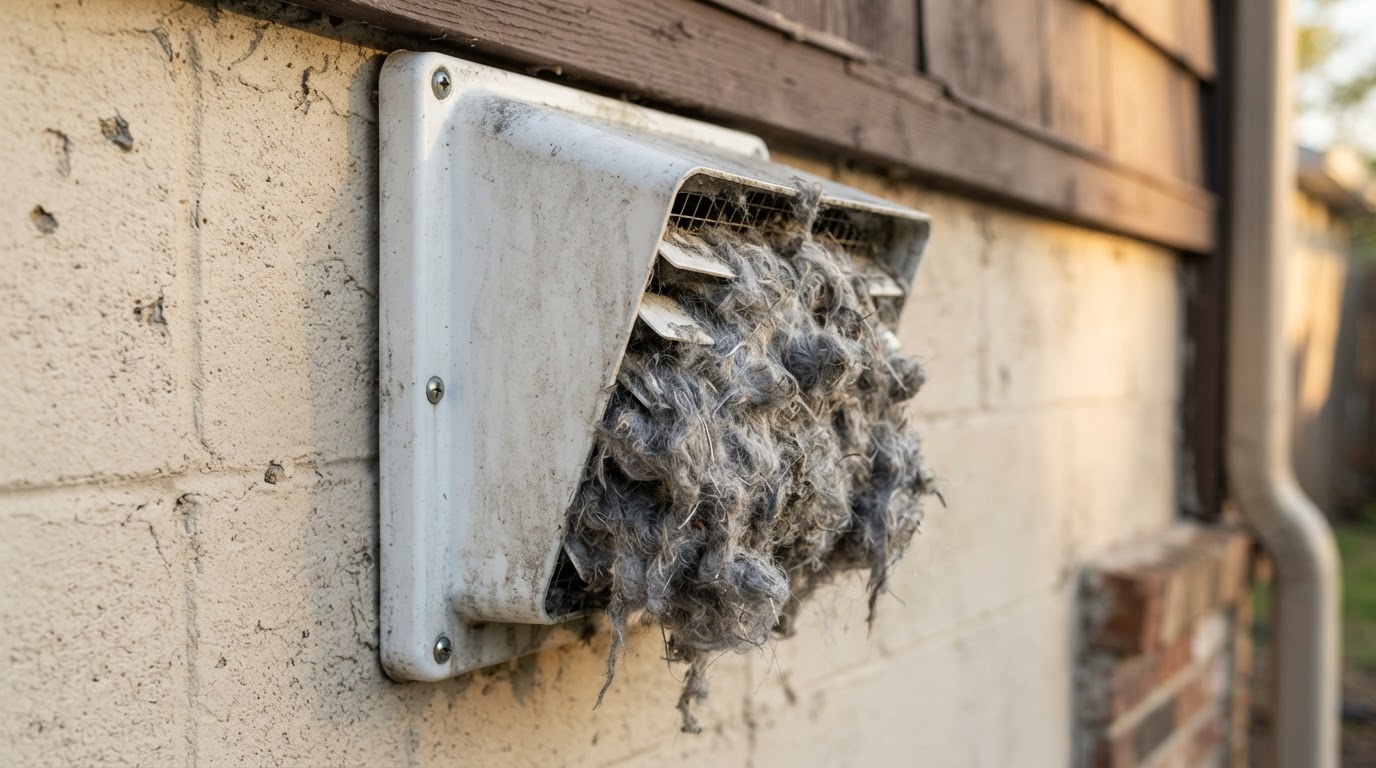
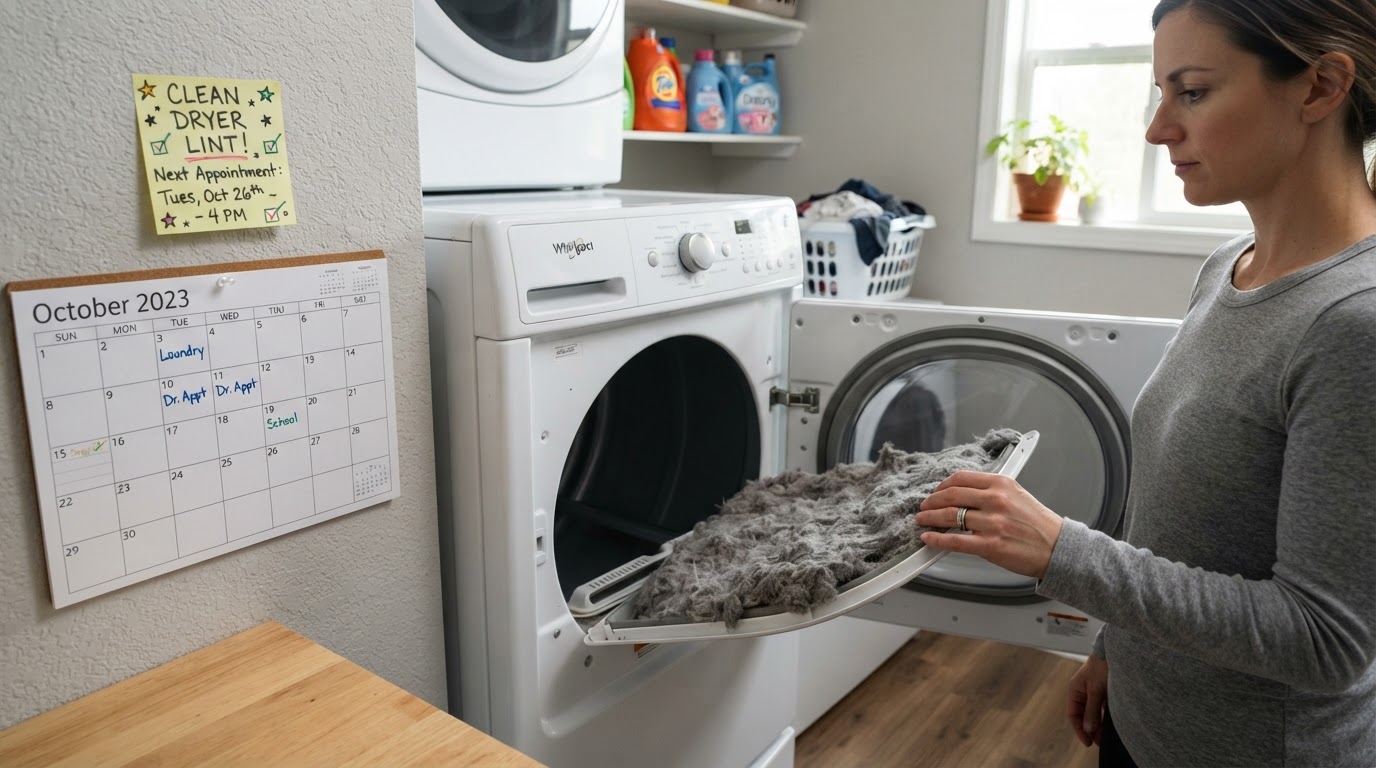
Searching "dryer cleaning services near me" is usually prompted by a real warning sign — a load taking two cycles to dry, a hot dryer top, or lint visible at the exterior vent — and the goal is to find a local provider who clears the full exhaust run rather than only the lint trap. The lint trap catches a fraction of what the dryer produces; the rest travels the duct to the exterior, and the duct is where the fire risk and the drying-time problem both live.
The first distinction is between appliance service and duct cleaning. "Dryer cleaning" can mean cleaning the dryer's internal lint path and heating element — an appliance repair — or it can mean cleaning the exhaust duct between the dryer and the exterior wall, which is the fire-prevention service. Most dryer cleaning services near me results refer to the exhaust duct, but it is worth confirming with the provider which scope they are quoting, because the two jobs address different problems and use different equipment.
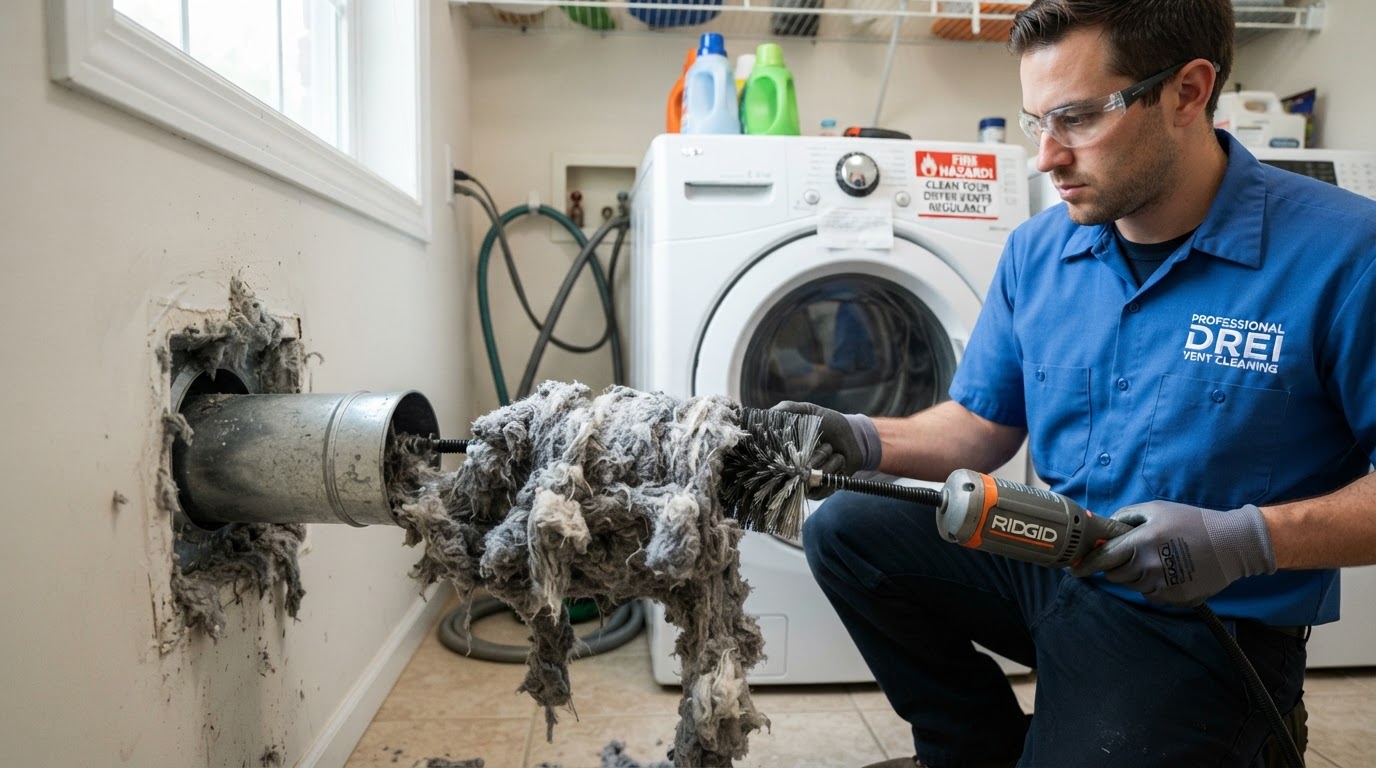
A complete exhaust cleaning clears the full run. The technician disconnects and moves the dryer, inspects and often replaces the transition hose behind the machine, then feeds a rotary nylon brush sized to the duct through the full length of the run while a coordinated HEPA vacuum extracts the loosened lint. Each elbow is brushed separately, because lint packs at every change of direction, and the exterior wall hood and flapper are cleared and checked for free movement. A service that stops at the back of the dryer does not reach the section that causes the restriction.
The warning signs that justify the search are the ones the U.S. Fire Administration has long highlighted. Clothes taking longer than one cycle to dry, a dryer that feels hot to the touch, a burning smell during a cycle, and lint accumulating around the vent or exterior hood all point to a restricted exhaust. Any of them is a reason to schedule the service soon rather than at the next convenient date, because the restriction is also the fire condition.
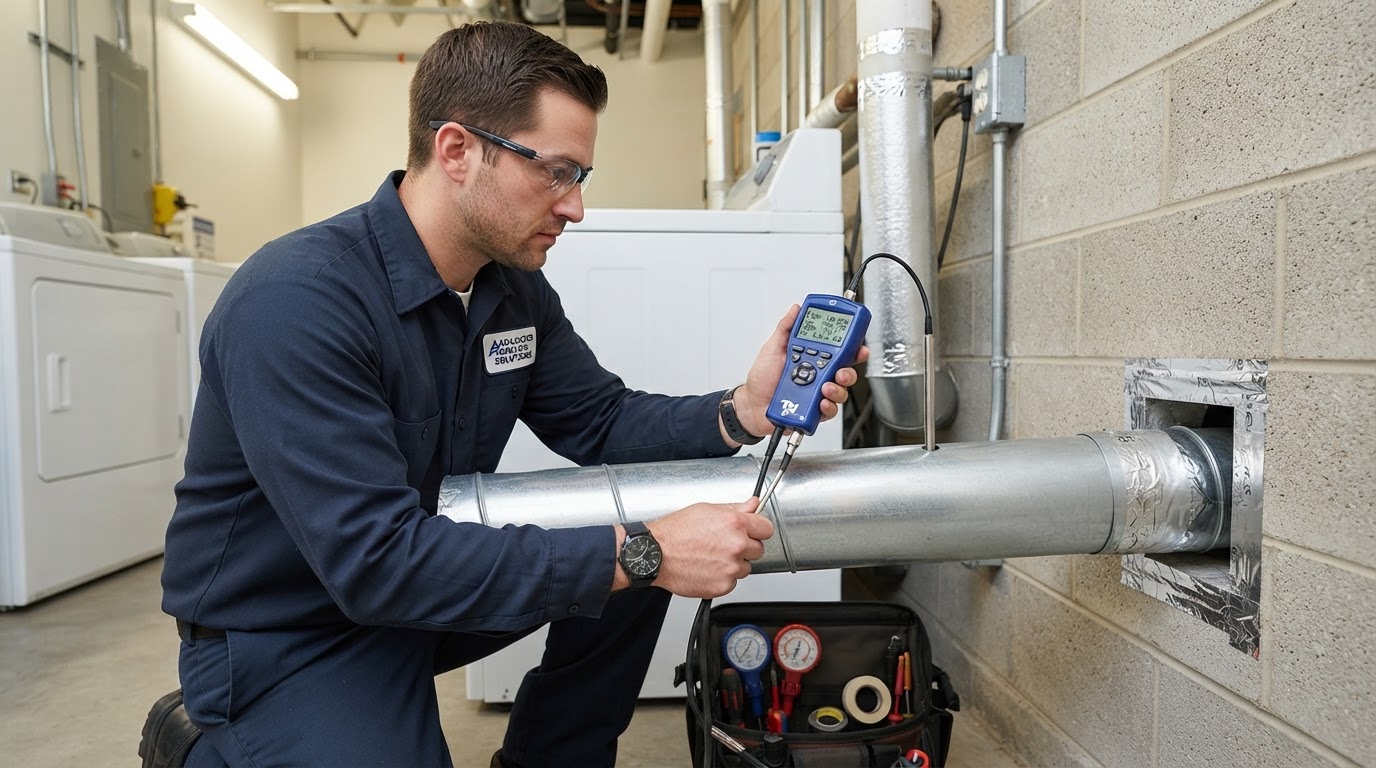
Vetting a local provider follows the same logic as any HVAC service. Confirm the method is a full-run brush and vacuum rather than a quick blower, check general liability insurance, and ask whether the service includes verifying airflow at the exterior hood after the cleaning. For longer or problem runs, a provider who measures airflow in cubic feet per minute and static pressure against the dryer manufacturer's limits can tell you whether the cleaning solved the restriction or whether the run is undersized, over-length, or crushed and needs re-routing — which is the difference between a maintenance visit and a repair.
Frequency should match the household. A typical single-family home with a short, straight run is reasonable on an annual schedule; a longer run, a run with several elbows, or a household doing many loads a week is safer on a twice-yearly schedule. A dryer with a vertical run that terminates through the roof is the highest-risk configuration, because lint collects against gravity in the vertical section, and it warrants more frequent inspection. A good local provider will recommend the right interval based on the run they see, not a generic calendar.
The practical guidance: when you search dryer cleaning services near me, confirm the provider clears the full run with a brush and coordinated vacuum, replaces the foil or plastic transition hose with rigid or semi-rigid metal, verifies airflow at the exterior hood, and gives you a written summary with a recommended return interval. The lint trap is the visible part, but the durable result and the fire-prevention benefit both come from the duct behind it. A local provider who scopes the run, names the method, and documents the airflow is the one the search is meant to find — and the difference between that result and a cleaned lint trap is the difference between reducing a fire risk and tidying the surface.